

Fluke 1587 vs 1577: Which Insulation Multimeter is Right for You?
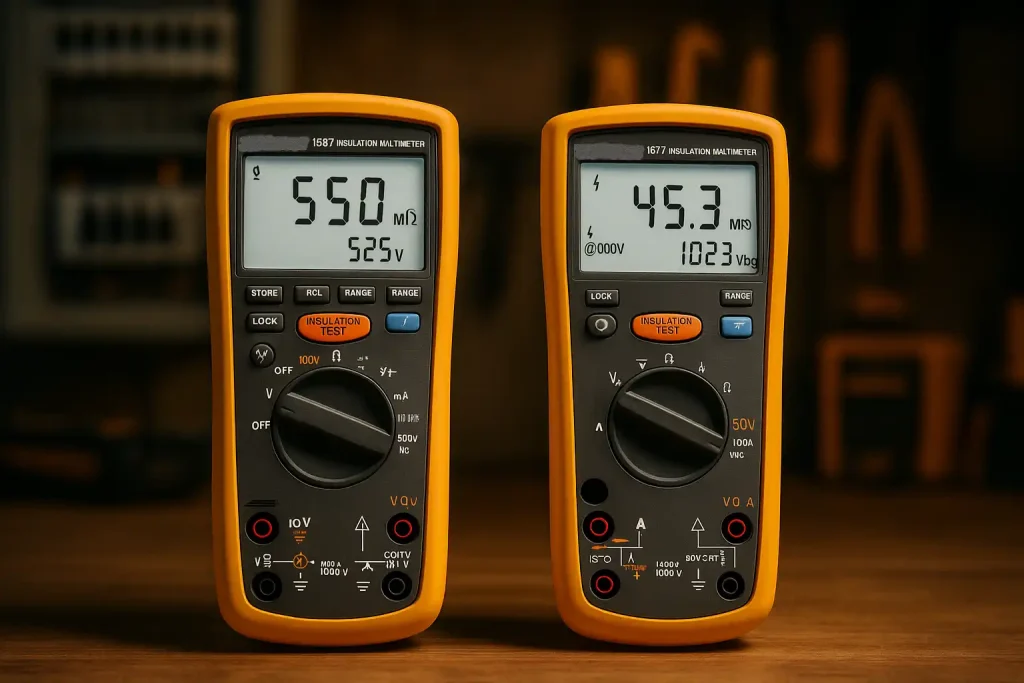
When you’re working with electrical systems—whether for residential, industrial, or commercial purposes—accurate insulation testing is crucial for ensuring safety and performance. Fluke, a leader in electrical measurement tools, offers two high-quality insulation multimeters: Fluke 1587 and Fluke 1577. These models provide robust functionality for insulation resistance testing, but their specific features and capabilities make each one more suitable for different types of tasks.
In this article, we will compare the Fluke 1587 vs Fluke 1577, breaking down their differences in accuracy, features, usability, and ideal use cases. Our aim is to help you make an informed choice based on your specific needs, whether you’re an electrical technician, industrial engineer, or a contractor working in a specialized field.
Fluke 1587 vs 1577 specs
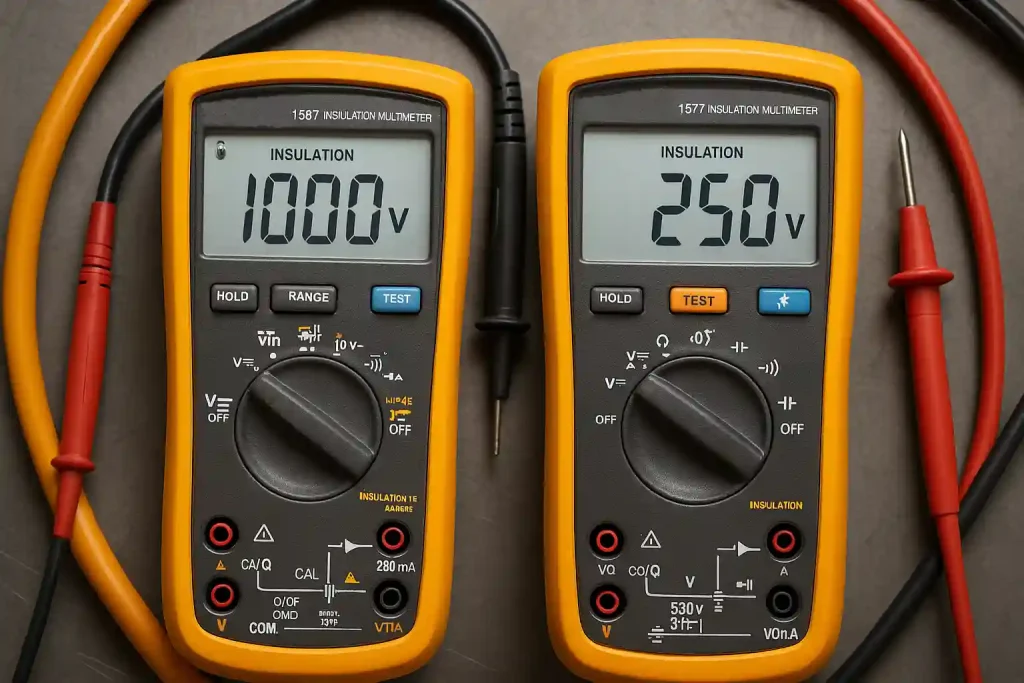
Let’s start with a quick breakdown of the technical specifications that define the Fluke 1587 and Fluke 1577:1 2
| Feature | Fluke 1587 | Fluke 1577 |
|---|---|---|
| Test Voltage | 250V, 500V, 1000V | 50V, 100V, 250V, 500V, 1000V |
| Max Test Voltage | 1000V | 1000V |
| Resistance Range | 0.01 MΩ to 10 GΩ | 0.01 MΩ to 10 GΩ |
| Display | 1,000-count LCD | 1,000-count LCD |
| Battery Type | 6 AA batteries | 6 AA batteries |
| Weight | 520 g | 570 g |
| Safety Rating | CAT III 600V, CAT IV 300V | CAT III 600V, CAT IV 300V |
| Advanced Features | Temperature measurement, Peak capture, Capacitance | Temperature measurement, Peak capture, Capacitance |
| IP Rating | IP40 | IP54 (dust and water-resistant) |
| Price | Higher | More affordable |
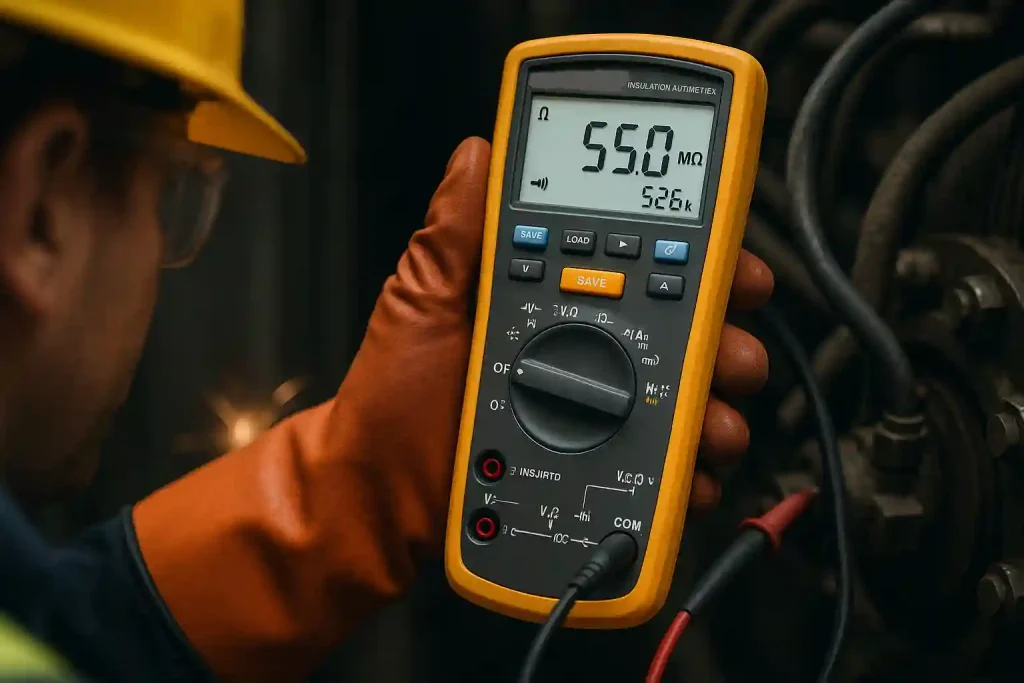
| Question | If “Yes” → | Suggested Model |
|---|---|---|
| Working in industrial environments? | ✅ | Fluke 1587 |
| Need to test low-voltage systems? | ✅ | Fluke 1577 |
| Need advanced features? | ✅ | Fluke 1587 |
| Need higher accuracy? | ✅ | Fluke 1587 |
| Need quick and simple testing? | ✅ | Fluke 1577 |
Both the Fluke 1587 and Fluke 1577 are excellent choices for insulation resistance testing, but they cater to different needs. If you prioritize precision, high-voltage testing, and advanced features, the Fluke 1587 is your ideal tool. However, for budget-conscious users who still need reliable performance in residential and low-voltage environments, the Fluke 1577 is a highly capable option.
Can’t decide between models? Get a free consultation with our experts. Click here to open popup

What is the main difference between the Fluke 1587 and Fluke 1577
The primary difference lies in the test voltage range. The Fluke 1587 offers 250V, 500V, and 1000V test options, while the Fluke 1577 provides more versatility with 50V, 100V, 250V, 500V, and 1000V options. Additionally, the Fluke 1587 offers slightly higher accuracy and additional features, such as peak capture and capacitance measurement, making it ideal for high-precision testing in industrial applications.
Are both Fluke 1587 and Fluke 1577 waterproof
Neither model is fully waterproof, but both have an IP rating. The Fluke 1587 is rated IP40, meaning it’s dustproof but not water-resistant, while the Fluke 1577 is rated IP54, meaning it is dust- and splash-resistant, making it more suitable for outdoor use.
- Fluke Corporation. (n.d.). Fluke 1577 datasheet[↩]
- Fluke Corporation. (n.d.). Fluke 1587 datasheet[↩]
- Fluke Corporation. (n.d.). Fluke 1587 Insulation Multimeter[↩]
- Fluke Corporation. (n.d.). Fluke 1577 Insulation Multimeter.[↩]

 Bench Multimeters