

Fluke 561 Review: Evaluating a 2-in-1 Temperature Solution for HVAC Maintenance
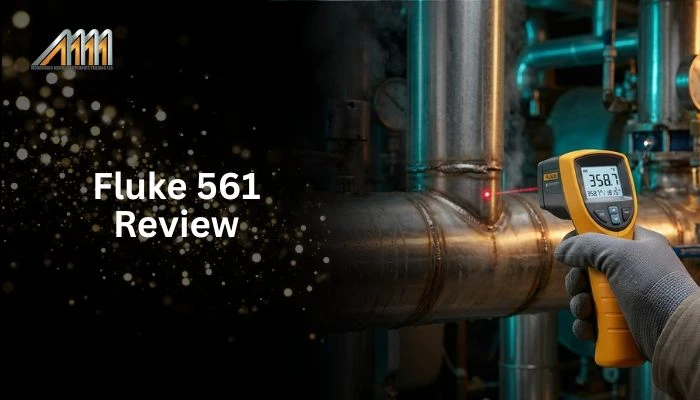
Precision Temperature Diagnostics: A Technical Look at the Fluke 561
Optimizing HVAC/R troubleshooting workflows with dual-mode measurement.
The Challenge of Thermal Validation
In HVAC/R maintenance, the difference between a system performing optimally and one failing often lies in the delta between surface temperature and internal pipe temperature. Relying on a single measurement method often leaves gaps in data. The Fluke 561 addresses this by integrating Non-Contact Infrared (IR) and K-Type Contact measurement into a single, high-reliability instrument.
Why Dual-Mode Matters for Professionals
Professional diagnostic workflows require versatility. The Fluke 561 Infrared Thermometer is engineered to handle:
- Rapid Scanning (IR): Quickly identify hot spots on motors, panels, or ductwork from a distance.
- Precision Validation (Contact): Use the included Velcro pipe probe to get accurate, stable internal pipe temperatures without the need for climb-up or permanent sensor installation.
- Environmental Consistency: The ability to toggle between modes ensures you aren’t fighting two different tools while diagnosing a system failure.
Technical Specification Matrix
| Feature | Technical Capability |
|---|---|
| IR Temp Range | -40°C to 550°C |
| Contact (K-type) | Up to 550°C |
| Optics (D:S) | 12:1 |
| Resolution | 0.1°C / 0.1°F |
| Safety/Rating | Class II Laser |
Diagnostic Best Practices
To maximize the Fluke 561’s utility, understand its environmental limitations. The 12:1 distance-to-spot ratio is optimized for mid-range scanning. For highly precise surface measurements, decrease the distance. Additionally, when switching to the K-type probe, allow for a brief thermal stabilization period to ensure accurate heat transfer from the pipe surface to the sensor.

 Bench Multimeters