

Testo 512-1 vs 512-2: Choosing the Right Differential Pressure Meter for HVAC
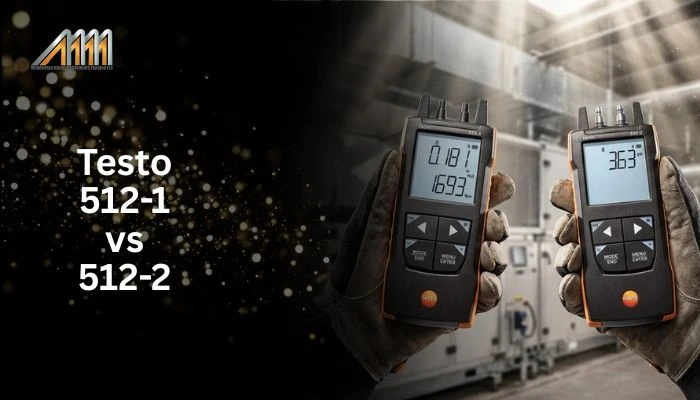
Testo 512‑1 vs Testo 512‑2 Review
Choosing the Right Differential Pressure Meter for HVAC Diagnostics and Industrial Applications
Differential pressure measurement is a fundamental part of HVAC system diagnostics and industrial process monitoring. Technicians frequently need to evaluate pressure differences in ventilation ducts, filters, cleanrooms, and airflow systems in order to verify performance and detect potential inefficiencies.
Among the instruments commonly used for these tasks are the Testo 512‑1 and Testo 512‑2. Both models belong to the reliable Testo 512 series and are widely recognized for their accuracy and durability in professional measurement environments. However, despite their similar design and interface, the two devices are intended for different pressure ranges and working scenarios.
This detailed review explores the differences between the Testo 512‑1 and Testo 512‑2, including their pressure ranges, ideal applications, and practical use cases in HVAC and industrial environments.
Overview of the Testo 512 Differential Pressure Series
The Testo 512 series has been developed specifically for precise differential pressure measurements. These instruments are frequently used by HVAC engineers, commissioning technicians, and facility maintenance professionals who need dependable readings when diagnosing airflow or pressure‑related issues.
A differential pressure meter measures the difference between two pressure points in a system. In HVAC applications, this is particularly useful when evaluating airflow resistance across components such as filters or ducts.
The Testo 512 instruments are valued for several reasons:
- High precision measurement for pressure diagnostics
- Clear digital display for easy reading during field work
- Robust design suitable for daily professional use
- Wide applicability in ventilation systems and industrial processes
The most important difference between the two models is the measurement range, which directly affects their suitability for specific applications.
Quick Comparison: Testo 512‑1 vs Testo 512‑2
Testo 512‑1
Designed for ventilation and airflow diagnostics
- Pressure range: 0 to 200 hPa
- Higher sensitivity for low‑pressure measurements
- Ideal for HVAC duct testing
- Commonly used for filter pressure drop checks
Testo 512‑2
Designed for higher pressure environments
- Pressure range: 0 to 2000 hPa
- Suitable for industrial pressure measurements
- Handles larger pressure differences
- More versatile for heavy‑duty systems
Technical Specification Comparison
| Feature | Testo 512‑1 | Testo 512‑2 |
|---|---|---|
| Pressure Range | 0 to 200 hPa | 0 to 2000 hPa |
| Primary Use | HVAC ventilation diagnostics | Industrial pressure monitoring |
| Measurement Type | Differential pressure | Differential pressure |
| Typical Applications | Duct pressure, filter checks | Industrial system diagnostics |
Applications in HVAC Systems
In HVAC environments, differential pressure measurement helps technicians verify whether airflow is moving correctly through ventilation systems. Excessive pressure drop often indicates clogged filters, blocked ducts, or inefficient system operation.
The Testo 512‑1 is particularly useful in these environments because HVAC systems typically operate within lower pressure ranges. Its higher sensitivity allows technicians to detect even small pressure variations that could affect airflow balance.
Typical HVAC tasks include:
- Checking pressure drop across air filters
- Balancing ventilation systems
- Monitoring duct pressure
- Diagnosing airflow restrictions
Industrial Measurement Scenarios
In industrial environments, pressure differences can be significantly higher than in standard ventilation systems. For these cases, the wider measurement range of the Testo 512‑2 becomes essential.
Technicians working with industrial equipment, process ventilation systems, or specialized testing setups may encounter pressure values that exceed the limits of lower‑range instruments. The 512‑2 ensures that these measurements can be captured accurately without exceeding the instrument’s operating range.
Common industrial applications include:
- Process pressure monitoring
- Industrial ventilation diagnostics
- Pressure testing in technical facilities
- High‑pressure airflow systems
Which Differential Pressure Meter Should You Choose?
Choosing between the Testo 512‑1 and Testo 512‑2 depends primarily on the pressure levels you expect to measure in your work environment.
- Testo 512‑1 is the best option for HVAC professionals who regularly measure pressure differences in ventilation ducts and filters.
- Testo 512‑2 is better suited for technicians dealing with higher pressure ranges in industrial or specialized systems.
Selecting the appropriate pressure range ensures more accurate readings and prevents unnecessary measurement limitations in the field.
Final Thoughts
Both the Testo 512‑1 and Testo 512‑2 provide reliable differential pressure measurement capabilities backed by Testo’s reputation for precision instruments. While the two devices share similar design principles, their pressure ranges clearly define their primary use cases.
For everyday HVAC diagnostics and ventilation system commissioning, the Testo 512‑1 offers excellent sensitivity and precision. Meanwhile, the Testo 512‑2 expands measurement possibilities for technicians who work with higher pressure systems or industrial equipment.
By choosing the instrument that matches your measurement range requirements, you ensure more efficient troubleshooting, accurate diagnostics, and better overall system performance analysis.
Need Price & Stock Availability?
Contact our sales team for current availability, quotation, and delivery details for the Testo 512-1 and 512-2.
Get Price & Stock on WhatsApp / استعلام السعر والتوفر واتساب
حتى إذا لم يكن المنتج موجودًا على الموقع، سيتواصل فريق المبيعات بسرعة.
Call: 04 447 6031



 Bench Multimeters