

What is the difference between Fluke 177 and 233?
Boris
6 min read

When it comes to reliable and professional digital multimeters, Fluke 177 and Fluke 233 are renowned for their accuracy, durability, and the trust they have earned among technicians worldwide. Both models are part of Fluke’s True-RMS series, offering high precision in measurements, but each has its own unique features and applications. This article explores the key differences between these two models in terms of design and ease of use, display and data logging, measurement capabilities, and target applications, helping you decide which model is best suited for your needs and work environment.
Feature Comparison Table Fluke 177 vs 233
| Feature | Fluke 177 | Fluke 233 |
|---|---|---|
| True-RMS | ✅ | ✅ |
| Display Type | Fixed LCD, 6000-count | Detachable LCD, 6000-count |
| Backlight | ✅ | ✅ |
| Bar Graph | ✅ | ✅ |
| Max Voltage | 1000V AC/DC | 1000V AC/DC |
| Max Current | 10A continuous, 20A for 30s | 10A continuous, 20A for 30s |
| Resistance | Up to 50 MΩ | Up to 50 MΩ |
| Capacitance | Up to 10,000 µF | Up to 10,000 µF |
| Frequency | 5 Hz – 100 kHz | 5 Hz – 50 kHz |
| Diode Test | ✅ | ✅ |
| Continuity Buzzer | ✅ | ✅ |
| Min/Max/Average | ✅ | ✅ |
| Data Logging | ❌ | ✅ (via IR port) |
| Wireless Display | ❌ | ✅ (up to 10 meters) |
| Auto Power Off | ✅ | ✅ |
| Battery Type | 1 × 9V | 3 × AA (base) + 2 × AA (display) |
| Battery Life | ~200 hours | ~400 hours (with display docked) |
| Weight | ~420 g | ~600 g |
| Size | ~173 x 85 x 50 mm | ~193 x 93 x 53 mm |
| Safety Rating | CAT IV 600V / CAT III 1000V | Same |
| Operating Temperature | -10°C to +50°C | -10°C to +50°C |
| Datasheet | Fluke 177 datasheet | Fluke 233 datasheet |
What Do Fluke 177 and 233 Have in Common?
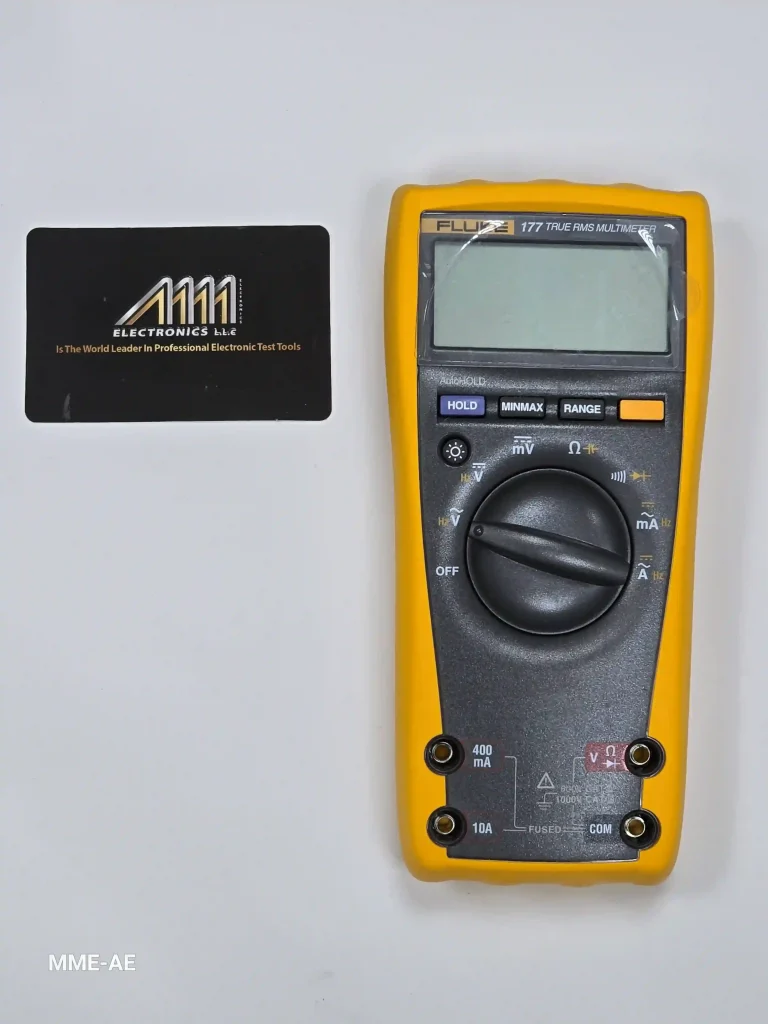
Before jumping into differences, let’s acknowledge their shared DNA. Both are built to the rigorous standards of Fluke multimeters and include:
- True-RMS Accuracy: Ideal for working with AC signals that aren’t pure sine waves (which is common in industrial environments).
- 6000 Count Display: Clear, easy-to-read LCD with backlight and analog-style bar graph.
- CAT IV 600V / CAT III 1000V Safety Ratings: Meets the highest safety levels for residential and industrial applications.
- Versatile Measurements: Voltage (up to 1000V), Current (up to 10A), Resistance (up to 50MΩ), Capacitance (up to 10,000μF), Frequency, Continuity, and Diode tests.
- Min/Max/Average Recordings: Track signal fluctuations over time.
- Auto and Manual Ranging: Choose your level of control.
If you’re only doing basic electrical measurements, either device will get the job done efficiently.
Fluke 177 vs. Fluke 233: Head-to-Head Comparison
Now that we’ve explored the individual features of these multimeters, let’s compare them head-to-head to highlight their differences:
The Defining Difference: Removable Wireless Display on Fluke 233
The biggest innovation in the Fluke 233 is its detachable wireless display module. This feature alone can change how and where you work:
Practical Benefits:
- Monitor readings from up to 10 meters (33 feet) away.
- Ideal for high-voltage panels, cramped control boxes, or when wearing PPE.
- Lets one technician do what normally takes two people.
- Improves safety by distancing the user from the measurement source.
How It Works:
- The base unit includes measurement electronics.
- The display slides off and communicates via low-interference wireless.
- Auto shut-off helps conserve power on both the base and display units.
This makes Fluke 233 a game-changer for anyone working in high-risk or restricted-access locations.
Measurement Accuracy: True-RMS and Beyond
Both models are True-RMS multimeters, offering high-fidelity measurement of irregular AC waveforms—important for:
- Variable frequency drives
- Lighting systems
- Industrial motors
However, there’s a slight edge in frequency range:
- Fluke 177: 5 Hz to 100 kHz
- Fluke 233: 5 Hz to 50 kHz
This means Fluke 177 is a better choice for higher-frequency applications such as communications and signal tracing.
In terms of voltage, current, resistance, and capacitance, both models perform identically:
- Voltage: 0.1 mV to 1000V
- Current: 0.01 mA to 10A (20A for 30 seconds)
- Resistance: up to 50 MΩ
- Capacitance: up to 10,000 μF
Data Logging and Infrared Communication
Fluke 233:
- Features an infrared port for basic data logging and communication with compatible software (e.g., FlukeView Forms).
- Allows storing and transferring readings for reports, analysis, or regulatory documentation.
Fluke 177:
- No IR port or logging features.
- Purely manual and direct measurement focused.
If you’re in quality assurance, energy auditing, or report-driven roles, Fluke 233 provides an edge.
Remote Display — The Fluke 233’s Signature Innovation
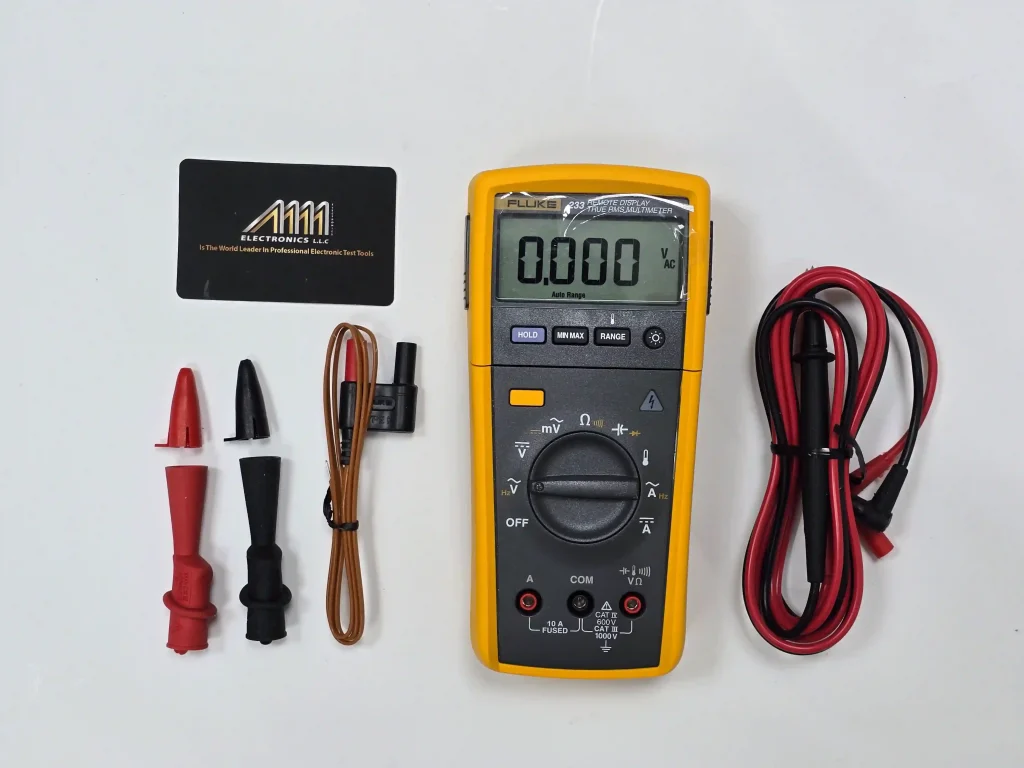
What truly sets the Fluke 233 apart is its removable wireless display. The screen detaches from the main unit and works up to 10 meters away, giving you freedom in:
- High-voltage cabinets where staying nearby is unsafe
- Tight mechanical enclosures
- Areas with poor visibility or physical obstruction
This feature isn’t just convenient, it can improve safety, save time, and enable one-person operation in scenarios where otherwise two technicians would be needed.
Connectivity and Logging — Where 233 Pulls Ahead
Unlike the 177, the Fluke 233 is equipped with an infrared (IR) port for limited data logging and PC interfacing. While it’s not full-scale software integration, this added communication ability supports:
- Basic data export
- Review of measurements off-site
- Documentation for QA or audits
The 177 is purely manual, making it simpler but less connected.
Form Factor and Power Considerations for Fluke 177 and Fluke 233
The Fluke 177 is lean, light, and designed for one-hand use — perfect for field techs on the move. It runs on a 9V battery and weighs less than 500g.
In contrast, the Fluke 233 requires five AA batteries (3 in the base, 2 in the display) to support its wireless system, and it’s slightly bulkier. However, it offers nearly double the battery life (400 hours vs. 200 hours), making it reliable for long sessions.
Built-in Temperature Measurement: Fluke 233 Wins Again
Another key advantage of the Fluke 233 is its built-in thermometer:
- Switch between electrical and thermal diagnostics without switching tools.
- Useful for HVAC technicians and industrial maintenance engineers.
Fluke 177 lacks this function entirely, making 233 more versatile out-of-the-box.
When to Choose Fluke 177
Opt for the Fluke 177 if you require:
- A robust, reliable multimeter for everyday tasks
- A tool for detailed electrical installation tasks with a preference for a simpler design
- A cost-effective solution without compromising quality
When to Choose Fluke 233
Consider the Fluke 233 if you need:
- Remote display capabilities for challenging environments
- Flexibility in measurement tasks that require screen visibility in hard-to-reach places
- An innovative tool with cutting-edge features for specialized industries
Ultimately, choosing between the Fluke 177 and Fluke 233 depends entirely on your specific work environment and feature priorities. If you need a lightweight, affordable, and highly accurate multimeter for everyday troubleshooting, the Fluke 177 delivers rock-solid performance without extra complexity. However, if you work in hazardous or hard-to-reach areas, the Fluke 233 offers a wireless detachable display, built-in temperature measurement, and data logging capabilities, making it the ideal tool for industrial diagnostics and enhanced safety. Both meters carry the legacy of Fluke’s precision and durability, the better choice is the one that fits your workflow best.
What is the main difference between Fluke 177 and Fluke 233?
The Fluke 233 features a detachable wireless display and built-in temperature measurement, while the Fluke 177 is a simpler, lighter, and more affordable multimeter.
Does Fluke 233 support temperature measurement?
Yes, Fluke 233 has a built-in thermometer, making it suitable for HVAC and industrial diagnostics.
Which multimeter is better for industrial use, Fluke 177 or Fluke 233?
Fluke 233 is better suited for industrial environments due to its wireless display, data logging, and temperature measurement features.
Does Fluke 177 or 233 have better battery life?
Fluke 233 lasts up to ~400 hours (with display docked), while Fluke 177 lasts ~200 hours.
Share


 Bench Multimeters