

How to Test Electric Vehicle Circuits Safely with a Multimeter- best EV multimeters

What Do You Need? 🚀
Do not use a standard multimeter on EV batteries. You need a CAT IV 600V / CAT III 1000V rated meter.
For basic checks, the Fluke 87V MAX is the rugged standard. However, for battery health and leakage testing, a 2-in-1 Insulation Multimeter like the Fluke 1587 FC or Megger MIT420/2 is mandatory to ensure the high-voltage system is truly isolated from the chassis.
Testing these systems safely requires more than a basic digital multimeter — it demands a specialized EV multimeter built for high-voltage safety, True RMS accuracy, and precision battery diagnostics.In this comprehensive 2026 guide, you’ll learn how to use a multimeter to test EV circuits safely, discover the best models from Fluke, and understand essential safety practices for the Middle Eastern climate and automotive market.
Understanding Electric Vehicle Electrical Systems
Unlike traditional cars powered by combustion engines, electric vehicles rely on complex electrical architectures.
An EV typically includes:
- High-voltage battery pack: Ranges from 300V to over 800V DC
- Onboard charger: Converts AC to DC power during charging
- Inverter and motor controller: Converts DC from the battery into AC for the drive motor
- Low-voltage (12V) system: Powers lights, sensors, and accessories
To troubleshoot these components, technicians must use a multimeter capable of measuring both high-voltage DC and AC systems with CAT IV safety rating to protect against arc flash or accidental contact.
Why Regular Multimeters Are Not Safe for EV Work
Standard digital multimeters are designed for low- to medium-voltage environments such as residential or industrial electrical panels.
When connected to an EV battery pack that can exceed 800 volts, a non-rated meter can:
- Fail due to insulation breakdown
- Cause internal arcing or fuse explosion
- Expose the user to life-threatening electric shock
An EV-rated multimeter is specifically engineered to withstand high-energy transients and provide accurate readings under noisy electrical environments typical of automotive power electronics.
Essential Features of an EV Multimeter
When selecting a multimeter for electric vehicle maintenance, look for the following key specifications:
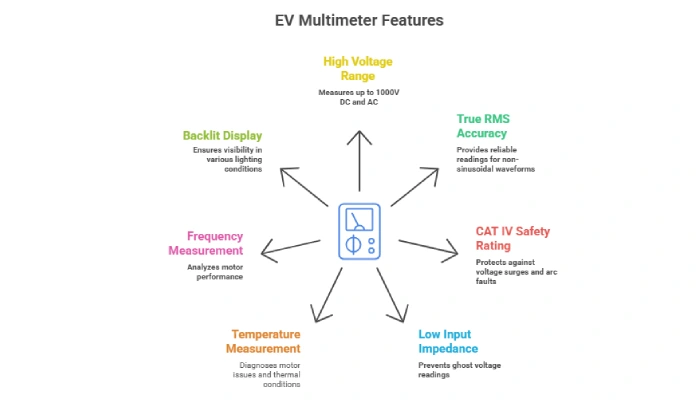
- High Voltage Range: At least 1000V DC and 1000V AC measurement capability.
- True RMS Accuracy: Ensures reliable readings for non-sinusoidal inverter waveforms.
- CAT IV Safety Rating: Protection against transient voltage surges and arc faults.
- Low Input Impedance (LoZ): Prevents ghost voltage readings.
- Temperature and Frequency Measurement: For motor diagnostics and thermal testing.
- Backlit Display: For visibility in garages and outdoor sites.
How to Test an Electric Vehicle Circuit Safely
Working on EV systems demands precision and adherence to strict safety protocols.
Follow these steps to ensure safe and accurate measurement:
- Wear PPE: Always use Class 0 or higher-rated insulating gloves and face shields.
- Verify Equipment: Inspect your multimeter and test leads for cracks or wear before use.
- Check Meter Functionality: Use a known voltage source to confirm proper operation.
- Isolate Power: Disconnect the high-voltage system following the manufacturer’s lockout/tagout procedure.
- Measure DC Bus Voltage: Set your multimeter to DC voltage, connect red probe to positive and black to negative terminal. Wait until the voltage drops below 10V before proceeding with service.
- Test Insulation Resistance: Some Fluke meter integrate insulation testing modes to check cable integrity.
- Verify Continuity: Use the continuity function to confirm safe circuit disconnection before reassembly.
Always follow the vehicle manufacturer’s service manual when performing electrical tests.
Incorrect measurement techniques can damage sensitive EV components or compromise personal safety.
Performing Continuity Checks on EV and Automotive Circuits
Continuity testing plays a foundational role in diagnosing wiring, grounds, and interlocks. Before moving into high-voltage diagnostics, this simple test verifies the integrity of low-voltage control circuits that manage EV operation.
To fully understand the value of this process, let’s review the correct setup and recommended procedures.
Safety Before Continuity Testing
Before starting any continuity check, always confirm the circuit is powered off and all capacitors are discharged. Sensitive ECUs can be damaged by static or improper probing.
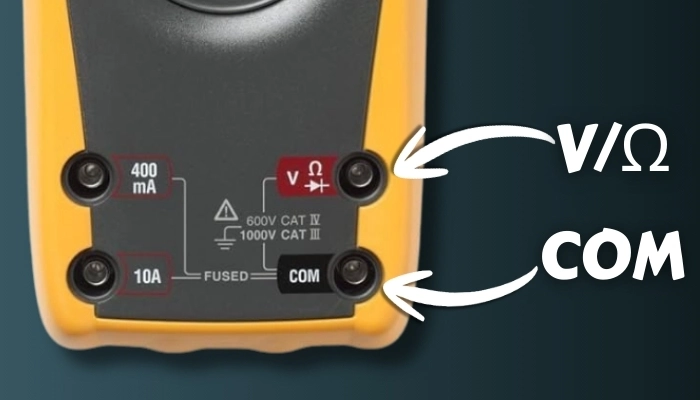
Setting Up the Multimeter for Continuity Mode
Use the following setup:
-
Black lead → COM
-
Red lead → V/Ω
-
Switch to resistance
-
Enable continuity mode (sound wave icon)
A sustained beep confirms a low-resistance path (under 25–50 Ω).
Step-by-Step Continuity Testing Procedure
To put continuity testing into practice, technicians can follow these common checks:
-
Testing across fuse terminals
-
Checking switch functionality
-
Testing end-to-end continuity in wiring harnesses
Stable beep + 0.0–0.2 Ω reading = excellent continuity
No beep + OL = broken or corroded circuit
Ground Continuity Testing
Ground faults are common in EVs exposed to heat or corrosion. Testing ground integrity ensures stable sensor and control-module performance.
Best Practices for Continuity Checks
-
Always test a known-good component first
-
Wiggle harnesses to detect intermittent wiring faults
-
Label or log results in complex harness systems
-
Remember continuity does not indicate voltage presence
This process ensures technicians can confidently rule out wiring issues before engaging with high-voltage diagnostics.
Fluke Multimeters for EV Testing
Fluke’s automotive and industrial multimeters are trusted globally for high-voltage applications.
They are certified for CAT IV environments and come with advanced features like data logging, low-pass filtering, and wireless connectivity for safe distance monitoring.
Best Fluke Models for EV Technicians
Here is a structured comparison of Fluke’s top multimeters for EV diagnostics:
| Model | Voltage Range (DC) | True RMS | Safety Rating | Key Features |
|---|---|---|---|---|
| Fluke 1587 FC | 1000 V | Yes | CAT III 1000 V / CAT IV 600 V | It is a 2-in-1 tool (Digital Multimeter + Insulation Tester). It saves you from carrying two separate devices. |
| Fluke 87V MAX | 1000V | Yes | CAT III 1000 V / CAT IV 600 V | IP67 Waterproof & Dustproof. If you work in industrial areas like Jebel Ali or dusty environments, this meter is nearly indestructible. |
| Megger MIT420/2 | 600 V | Yes | CAT IV 600 V / CAT III 1000 V | Stabilized insulation test voltage prevents over-testing or damaging sensitive components. |
Fluke’s True RMS technology ensures accurate readings for inverters and power control systems, while their rugged casing and thermal tolerance make them ideal for automotive workshops in the Gulf.
Testing EV Batteries with a Multimeter
EV battery health determines both performance and safety.
While advanced battery analyzers exist, a high-quality multimeter can still perform essential checks:

1. Checking Battery Voltage
Each cell in an EV battery pack typically provides around 3.6–3.7V.
By measuring the total pack voltage, technicians can confirm balance and detect weak modules.
2. Verifying Ground Isolation
Use insulation resistance testing to ensure no leakage current between battery terminals and the vehicle chassis.
3. Temperature Testing
A thermocouple connected to the multimeter can monitor temperature rise during charging or discharging cycles — critical in hot climates like Dubai or Riyadh.
4. Connector Resistance
Measure resistance across connectors and busbars to detect corrosion or poor contact points that may cause overheating.
High-Voltage Safety Practices for EV Technicians
EV servicing introduces electrical hazards that exceed those of conventional automotive systems.
Follow these safety guidelines to minimize risk:
- Always wear insulated gloves rated 1000V or above.
- Use CAT IV-rated test leads and verify them before use.
- Never measure directly across high-voltage lines without confirming isolation.
- Discharge capacitors before performing resistance or continuity tests.
- Keep one hand behind your back during live testing to reduce shock path risk.
- Use insulated mats and barriers in service bays.
Technicians in GCC workshops often perform pre-service voltage checks to confirm zero potential before touching any component — a vital safety protocol.
Environmental Considerations in GCC EV Maintenance
Working in the Gulf adds unique challenges: high humidity near the coast, fine dust in desert areas, and intense sunlight in open-air workshops.
Choose a multimeter with:
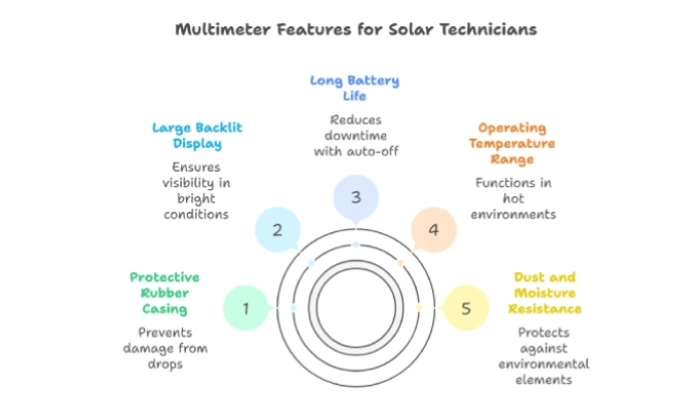
- IP54 or higher dust and moisture resistance
- Operating temperature range up to 50°C
- Long battery life and auto-off functionality
- Large, backlit display for bright conditions
- Protective rubber casing to prevent shock from accidental drops
Conclusion
The future of transportation in the Middle East is electric — and with it comes the responsibility of safe, precise, and efficient maintenance.
A professional-grade EV multimeter is more than a diagnostic tool; it’s a safety shield for technicians working on high-voltage systems.
Brands like Fluke and megger have engineered multimeters that deliver uncompromising safety, accuracy, and resilience under the region’s extreme conditions.
For professionals in the UAE and Saudi Arabia, these tools ensure compliance, confidence, and long-term reliability.
Need multimeters in the UAE?
MME supplies professional multimeters in the UAE. Browse the range or chat with our team on WhatsApp.



 Bench Multimeters