

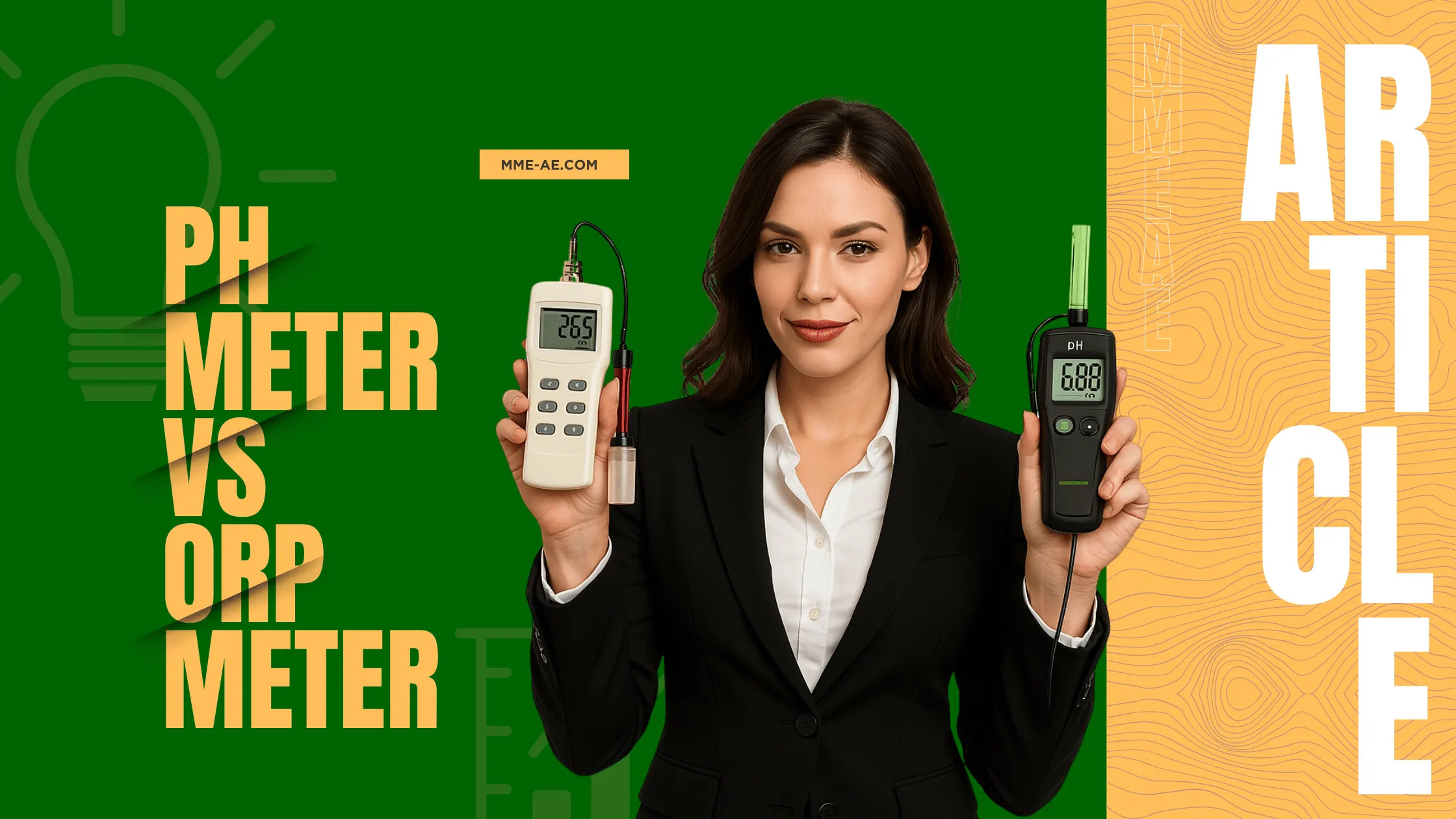
In the world of water quality measurement, pH meters and ORP (Oxidation-Reduction Potential) meters are used to measure distinct but interrelated aspects of water chemistry. Choosing the right tool depends on the specific requirements of your water testing application, whether it’s for environmental monitoring, industrial processing, or managing drinking water quality. we are going to explore the functions, applications, and unique benefits of each instrument.
What are pH Meters? How does it work?
A pH meter measures the concentration of hydrogen ions (H⁺) in a solution, determining its acidity or alkalinity. The pH scale ranges from 0 to 14, with values below 7 indicating acidity, values above 7 showing alkalinity, and a reading of 7 being neutral. Maintaining the correct pH level is essential in applications like aquaculture, agriculture, wastewater treatment, and pool management, as it affects chemical reactions, biological processes, and overall water quality.
Different types of pH meters:
Here’s a breakdown of the types of pH meters on the market, each suited for different environments usage:
-
Pen or Stick pH Meters
Compact, portable, and easy-to-use, pen-type pH meters are ideal for quick field measurements. They are often waterproof and provide a basic reading, making them popular for testing soil, pools, aquariums, and simple water quality checks. They are widely used in Gardening, hydroponics, aquariums, and general pH testing but they may have few downsides. Generally limited in features compared to more advanced meters but offer convenience and affordability.
-
Handheld pH Meters
These devices are also portable and offer greater accuracy and often include more features than pen meters, such as data logging and temperature compensation. They’re designed for use in the field or in lab environments where mobility is required.
Their applications will be in Environmental water testing, food production, brewing, and agriculture. Due to their fields of application, they usually have more durable designs, better temperature compensation, better data logging, and greater precision.
-
Benchtop pH Meters
Mainly designs to be used in laboratory environments, benchtop pHmeters offer the highest accuracy and got broad range of features, including connectivity options, data storage, and multi-parameter measurement capabilities.
They will be your best choice in Scientific research, industrial labs, pharmaceuticals, and academic institutions.
Their most prominent features includes High accuracy, connectivity to computers or printers, multi-parameter measurement, and extensive data logging capabilities.
-
In-line pH Meters
Now if you need continuous monitoring, in-line pHmeters are installed directly into a process line or tank, providing real-time pH readings in industrial and commercial applications.
These are usually the devices we see in Water treatment plants, chemical processing, food and beverage production, and wastewater management.
If you manage to use these models, you will have Real-time monitoring, durable probes for harsh conditions, and compatibility with automated control systems.
-
Laboratory pH Meters
These pH models are Specifically designed for laboratory use, these are highly sensitive and accurate, often with multiple calibration points and advanced temperature compensation for precise measurements.
Since they have Advanced calibration, high precision, and adaptability to multiple types of electrodes, They are mostly used in Academic research, pharmaceuticals, environmental science, and any field requiring highly accurate pH analysis
-
Soil pH Meters
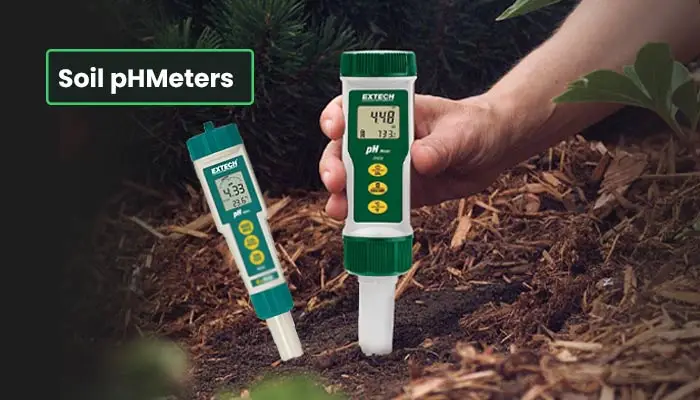
Soil pH meters are designed to measure pH in soil, these meters help assess soil health and nutrient availability for special plants. Their Applications will be in Agriculture, landscaping, and environmental testing.
These devices often include a metal probe or sensor specifically designed for soil.
-
Aquarium and Pool pH Meters
These are specifically designed for use in aquariums and pools, often with a waterproof design and features tailored for water quality monitoring.
If you own Aquariums, pools, spas, and fish farms, these will be your best options, since they are Waterproof, suitable for saltwater and freshwater, and often equipped with a temperature sensor.
Best Models for Each Type of pH Meter
Here’s a selection of top-rated models for each type of pH meter. These models are widely regarded for their reliability, accuracy, and specific application suitability.
-
Pen pH Meters
Apera Instruments AI209 pH Pen Tester
Accurate pH measurements, auto-calibration, and temperature compensation. This model is waterproof and ideal for beginners and hobbyists for applications like pool testing and hydroponics.
Popular for: Gardening, aquarium testing, and swimming pool maintenance.
-
Handheld pH Meters
Hanna Instruments HI98121
This model provides both pH and ORP measurement, with automatic temperature compensation and replaceable electrodes, making it ideal for fieldwork in environmental studies.
Popular for: Environmental monitoring, industrial applications, and fieldwork.
-
Benchtop pH Meters
Thermo Scientific Orion Star A111
High accuracy, large LCD screen, and excellent calibration capabilities. This lab-grade meter offers multi-parameter measurements and is compatible with a wide range of electrodes.
Popular for: Laboratory analysis in research institutions, pharmaceuticals, and industrial settings.
-
In-line pH Meters
Endress+Hauser Liquiline CM442
Designed for continuous monitoring with advanced data integration and robust sensor technology. Ideal for real-time pH monitoring in industrial pipelines.
Popular for: Industrial process control, water treatment plants, and chemical manufacturing.
-
Laboratory pH Meters
Mettler Toledo SevenCompact S220
Known for high precision, multi-point calibration, and a range of compatible electrodes. It provides reliable, detailed data for complex laboratory analyses.
Popular for: Academic and scientific research, food and beverage testing, and pharmaceuticals.
-
Soil pH Meters
Bluelab Soil pH Pen
A specialized probe for measuring soil pH levels directly, with a waterproof casing and user-friendly calibration.
Popular for: Agriculture, horticulture, and environmental field testing.
Soil pH Meters
-
Aquarium and Pool pH Meters
Milwaukee MW102 pH and Temperature Meter
Accurate, easy to use, and provides stable readings with automatic temperature compensation.
Popular for: Aquariums, pools, and spas where both pH and temperature are monitored for optimal water quality.

Aquarium and Pool pH Meters
What are the Applications of pH Meters
- Water Treatment: Regulating pH is essential to make water safe for human consumption or to optimize conditions for various treatments.
- Agriculture and Aquaculture: The pH affects the nutrient availability for plants and the health of aquatic life.
- Industrial Applications: Many industries use pHmeters to ensure the correct acidity or alkalinity in products and waste disposal.
What are ORP Meters?
What Does an ORP Meter Measure? An ORP meter assesses the oxidation-reduction potential of water, indicating its ability to either oxidize or reduce substances. ORP is measured in millivolts (mV), with positive readings indicating an oxidizing environment and negative readings suggesting a reducing environment. High ORP values often mean better disinfection potential, which is crucial for maintaining clean and safe water, as in swimming pools or drinking water systems.
Different types of ORP meters
We are going to review the most popular types of ORPmeters with their best field of applications so you know which one is better for your needs.
1. Pen ORP Meters
They are usually Compact and portable, pen-type ORP meters are easy to carry and provide quick ORP readings. These are popular for on-the-go measurements due to their simplicity and convenience. Pen models are Suitable for quick field tests in pools, spas, and small aquaculture setups.
They have Waterproof options, easily calibrated, lightweight design, and basic accuracy for general ORP testing.

1. Pen ORP Meters
2. Handheld ORP Meters
These ORP meters offer more precision and durability than pen meters and are often used in situations where portability and accuracy are both essential.
One of the Common types used in environmental monitoring, industrial fieldwork, and water treatment, as well as in agriculture.
The most prominent features are the Temperature compensation, robust design, and advanced calibration options, and some models may have data logging capabilities.
3. Benchtop ORP Meters
They are typically used in laboratories where high accuracy and detailed analysis are required. These meters often include a range of additional features, such as multi-parameter capabilities.
You may use them in Scientific research, industrial laboratories, and educational institutions.
They usually have High accuracy, multi-parameter measurement (often able to measure pH, conductivity, etc.), connectivity for data transfer, and extensive calibration options.
4. In-line ORP Meters
Designed for continuous monitoring, in-line ORP meters are integrated directly into processing systems or water lines, providing real-time ORP monitoring.
Common models that you may see in industrial processes like wastewater treatment, food and beverage production, and chemical manufacturing.
When you use these types you will have Real-time monitoring, durable sensors for continuous use, compatibility with automated control systems, and resistance to harsh chemical environments.
5. Data-Logging ORP Meters
These are equipped with data logging features, allowing users to record and store ORP readings over time for analysis and reporting.
Best types for Environmental monitoring, long-term research studies, and industrial applications where tracking ORP trends is necessary. Since they have Storage capabilities, often Bluetooth or USB connectivity for data transfer, and some may include app integration for remote monitoring.
6. Laboratory ORP Meters
These ORP meters are designed for lab use, these ORP meters offer the highest precision and are typically used in controlled environments for scientific analysis and research and are Most Suitable for academic research, pharmaceuticals, and environmental science labs.
You will see High sensitivity, advanced calibration capabilities, support for a range of electrode types, and built for handling various sample types, in almost all of their models.
7. ORP Controllers
ORP controllers are specialized devices that monitor ORP levels and adjust chemical dosing automatically to maintain desired ORP levels in a system. They are Widely used in pool maintenance, aquariums, and industrial applications that require automated chemical control.
Orp controllers have Automated control of oxidizing agents, integrated sensors, compatibility with dosing pumps, and real-time monitoring.
Best Models for Each Type of ORP Meter
1. Pen ORP Meters
Apera Instruments ORP20 Waterproof ORP Tester
- Features: Compact, waterproof design with replaceable probes and a wide ORP range. Ideal for quick ORP checks in pools and aquariums.
- Popular for: Pool and spa maintenance, aquarium testing, and basic ORP field testing.
-
Handheld ORP Meters
Extech RE300 Waterproof pH/ORP Meter
- Features: Measures both pH and ORP, with waterproof housing and temperature compensation, ideal for accurate readings in environmental applications.
- Popular for: Environmental fieldwork, water treatment, and industrial water quality testing.
-
Benchtop ORPMeters
Thermo Scientific Orion Star A214
- Features: A high-accuracy ORP meter that offers multi-parameter analysis, ideal for lab environments requiring precise ORP monitoring.
- Popular for: Research labs, industrial labs, and scientific studies requiring precise ORP data.
-
In-line ORP Meters
Honeywell UDA2182 Analyzer
- Features: Industrial-grade analyzer with continuous ORP monitoring capabilities, designed for integration in process lines with data logging and control systems.
- Popular for: Industrial process lines, water treatment, and chemical processing applications.
-
Data-Logging ORP Meters
Atlas Scientific EZO-ORP Circuit
- Features: Designed to integrate with microcontrollers for long-term data logging, ideal for custom water quality monitoring systems.
- Popular for: Environmental monitoring, IoT-based water quality systems, and research requiring long-term ORP tracking.
-
Laboratory ORPMeters
Hach HQ40D Portable Multimeter
- Features: Lab-quality, multi-parameter meter capable of measuring ORP, pH, and other parameters. It offers reliable data logging and is ideal for controlled lab testing.
- Popular for: Pharmaceutical, research, and environmental labs requiring robust ORP measurement.
-
ORP Controllers
Milwaukee MC510 ORP Controller
- Features: Automatically controls oxidizing agents based on ORP readings, providing reliable disinfection control in pools and aquariums.
- Popular for: Pool maintenance, aquariums, and automated disinfection systems in commercial water facilities.
What are the Applications of ORP Meters
- Disinfection Monitoring: In pools, spas, and drinking water, ORP levels indicate whether oxidizing agents (like chlorine) are active enough to kill pathogens.
- Aquaculture and Fisheries: ORP levels help monitor water quality for the well-being of aquatic species.
- Industrial Processes: ORPmeters are used to regulate and monitor redox reactions in chemical manufacturing and wastewater treatment.
pH vs. ORP: Key Differences
1. Measurement Units and Parameters:
- pH is measured on a scale from 0 to 14, determining the solution’s acidity or alkalinity.
- ORP is measured in millivolts (mV), showing the solution’s oxidizing or reducing potential.
2. Indicators of Water Quality:
- pH impacts factors like corrosion, scale formation, and biological activity. It affects the solubility and availability of nutrients, particularly in agricultural and aquaculture settings.
- ORP is a direct measure of a solution’s disinfecting power, which is essential for pathogen control in water treatment facilities and pools.
-
Practicality in Applications:
- pH meters are ideal for scenarios where the acidity or alkalinity of a solution needs to be maintained, such as in crop irrigation or wastewater pH regulation.
- ORP meters are better suited for environments where the disinfecting capability of water is critical, as in pools or drinking water systems.
Calibration and Maintenance of pH meter and ORPmeter
Both pH and ORP meters require regular calibration for accurate readings. pH meters are typically calibrated using buffer solutions with known pH values, while ORP meters are calibrated with solutions containing a known redox potential. Regular cleaning of the electrodes and occasional replacement are necessary for both types of meters, ensuring precision in readings and durability in performance.
So what should I choose? pH or ORP Meters
When deciding between a pH meter and an ORPmeter, consider the specific needs of your application:
- For applications focusing on chemical balance and biological activity (such as agriculture, environmental monitoring, or aquaculture) a pH meter is generally more appropriate.
- For environments requiring effective disinfection (such as swimming pools, water treatment plants, and drinking water facilities) an ORP meter is preferred due to its effectiveness in measuring the oxidation potential, which indicates the water’s ability to destroy pathogens.


د.إ0.00 (excl.VAT)
(5 reviews)

د.إ0.00 (excl.VAT)
(4 reviews)



 Bench Multimeters