


Last Updated: January 2025 | Reading Time: 25 minutes
HART field communicators are essential tools for plant maintenance technicians, instrumentation engineers, and automation professionals. This comprehensive guide covers everything from selecting the right HART communicator to advanced troubleshooting techniques that will save you hours in the field.
What is a HART Communicator and Why You Need One
A HART communicator (Highway Addressable Remote Transducer) is a handheld or portable device that allows technicians to configure, calibrate, and troubleshoot field instruments in industrial environments. Unlike traditional analog communication, HART technology enables digital communication simultaneously with the 4-20mA analog signal, providing access to device diagnostics, configuration parameters, and real-time process data.
In modern process automation facilities, HART field communicators have become indispensable tools. Whether you’re working in oil and gas operations, chemical processing, water treatment plants, or power generation facilities, understanding how to properly select and use a field device communicator can dramatically improve your maintenance efficiency and reduce unplanned downtime.
Key Fact:
Over 40 million HART-enabled devices are installed worldwide, making HART protocol the most widely adopted industrial communication standard for process automation. Understanding HART communication is essential for anyone working with smart field instruments.
Understanding HART Protocol: The Foundation of Smart Field Communication
Before diving into communicator selection, it’s crucial to understand the HART protocol itself. HART (Highway Addressable Remote Transducer) is a bidirectional communication protocol that superimposes digital communication signals on top of the standard 4-20mA analog signal without interfering with it.
The protocol operates using the Bell 202 Frequency Shift Keying (FSK) standard, transmitting digital data at 1200 bits per second. This allows two-way field communication while maintaining backward compatibility with existing analog systems. For maintenance technicians, this means you can access comprehensive device information without disrupting the process control signal.
How HART Communication Works in Industrial Environments
HART technology operates in two primary modes: point-to-point and multi-drop configuration. In point-to-point mode, the analog signal carries the primary process variable while digital communication provides access to secondary variables, diagnostics, and configuration data. This is the most common configuration in process plants.
Multi-drop mode configures multiple devices on a single pair of wires, with each device assigned a unique polling address. While the analog signal is fixed in multi-drop mode, all process variables are transmitted digitally. This configuration is ideal for monitoring applications where multiple sensor readings need to be collected from a single location.
For a detailed technical explanation suitable for maintenance professionals, our upcoming guide on HART Protocol Explained: A Guide for Maintenance Technicians provides comprehensive coverage of protocol fundamentals, command structures, and practical implementation considerations.
Types of HART Communicators: Finding the Right Tool for Your Application
HART communicators come in several configurations, each designed for specific applications and user requirements. Understanding these differences is critical when selecting the right device for your facility’s needs.
Handheld HART Communicators
Portable HART communicators are the workhorses of field maintenance. These battery-powered devices offer complete mobility, allowing technicians to work anywhere in the plant without requiring external power sources. Modern handheld communicators feature rugged construction, intrinsically safe designs for hazardous area operation, and intuitive touchscreen interfaces.
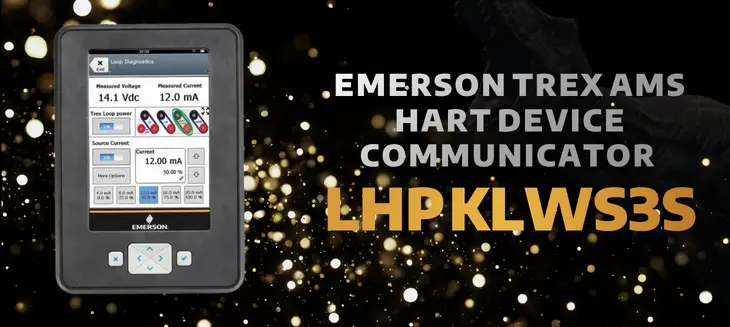
The Emerson AMS Trex Device Communicator represents the pinnacle of handheld HART technology, offering universal device support, advanced diagnostics capabilities, and seamless integration with asset management systems. Its rugged design withstands harsh industrial environments while providing comprehensive access to HART, FOUNDATION Fieldbus, and WirelessHART devices.
PC-Based HART Communication Software
PC-based solutions connect to field devices through HART modem interfaces, providing device configuration and monitoring capabilities from a laptop or desktop computer. These solutions excel in workshop environments, commissioning activities, and situations where detailed documentation and reporting are required.
Software-based communicators often integrate with plant asset management systems, enabling centralized device configuration management, version control, and automated documentation. This approach is particularly valuable for large-scale projects involving hundreds of devices that require standardized configuration.
Fixed HART Multiplexers and Gateways
Permanently installed HART multiplexers provide continuous access to field devices from control room workstations. These systems connect to multiple HART devices simultaneously, enabling remote configuration, diagnostics, and monitoring without requiring technicians to physically visit field instruments.
Our upcoming comparison article Portable vs Installed HART Communicators: What’s Right for You? will examine the specific advantages and limitations of each approach, helping you determine the optimal communication architecture for your facility.
⚡ Pro Tip for Technicians:
When working with hazardous area installations, always verify that your HART communicator carries the appropriate intrinsic safety certifications (ATEX, IECEx, CSA, FM) for your specific zone classification. Operating uncertified equipment in classified areas creates serious safety hazards and regulatory violations.
HART Communicator Selection Guide: Critical Features and Specifications
Selecting the right HART field communicator requires careful evaluation of your specific requirements, operating environment, and long-term support needs. The wrong choice can result in limited device compatibility, workflow inefficiencies, and unexpected costs.
Universal Device Support and DD Libraries
The most critical consideration is device compatibility. Modern HART communicators use Device Description (DD) files to communicate with field instruments. A comprehensive DD library ensures your communicator can work with devices from multiple manufacturers, eliminating the need for brand-specific tools.
Look for communicators that support automatic DD updates and include pre-loaded libraries from major manufacturers like Emerson, Yokogawa, Endress+Hauser, ABB, Siemens, and Honeywell. The ability to add custom device descriptions for specialized or legacy equipment provides essential flexibility for diverse installations.
Intrinsic Safety and Hazardous Area Certification
For facilities with classified hazardous areas, intrinsically safe operation is non-negotiable. Verify that your chosen communicator carries appropriate certifications for your specific zone classifications. Common certifications include:
- ATEX: European Union explosive atmospheres directive compliance
- IECEx: International electrotechnical commission certification for explosive atmospheres
- FM Approved: Factory Mutual certification for North American hazardous locations
- CSA: Canadian Standards Association certification
- NEPSI: National Certification for Explosion-Protected Electrical Products (China)
Rugged Construction and Environmental Protection
Field communicators must withstand demanding industrial environments including temperature extremes, dust, moisture, vibration, and occasional drops. Evaluate the environmental protection rating (IP rating), operating temperature range, and drop test specifications.
IP65 or higher protection is recommended for general industrial use, while IP67 provides superior protection for particularly harsh environments. Devices with magnesium alloy or ruggedized plastic housings offer the best balance of durability and weight.
Display Quality and User Interface Design
Modern touchscreen interfaces have revolutionized HART communicator usability, but display quality varies significantly between models. Look for high-resolution color displays with adjustable brightness for outdoor visibility. Sunlight-readable screens are essential if you work outdoors or in areas with high ambient light.
Interface design should follow logical workflows that match how technicians actually work in the field. Menu structures should provide quick access to common functions like device polling, parameter viewing, and configuration changes without requiring deep menu navigation.
Battery Life and Power Management
Extended battery life is crucial for field productivity. Evaluate both the rated battery life and the type of batteries used. Rechargeable lithium-ion batteries offer convenience and long-term cost savings, while devices accepting standard AA or AAA batteries provide flexibility when recharging isn’t possible.
Professional-grade communicators should provide at least 10-12 hours of continuous operation. Power management features like automatic sleep modes and backlight timeout extend battery life without compromising usability. Our upcoming guide on Extending Battery Life on Portable HART Communicators will provide detailed optimization techniques.
Data Management and Documentation Capabilities
Modern maintenance practices require comprehensive documentation of all device interactions. Your HART communicator should capture configuration snapshots, parameter changes, calibration data, and diagnostic information automatically.
Built-in memory sufficient for storing thousands of device configurations, data logging capabilities, and easy export to PC-based asset management systems are essential features. USB connectivity, Wi-Fi, or Bluetooth data transfer eliminates the need for proprietary cables and simplifies documentation workflows.
Multi-Protocol Support Beyond HART
While HART remains the dominant protocol, many facilities also utilize FOUNDATION Fieldbus, WirelessHART, or proprietary protocols. Universal communicators that support multiple protocols provide better long-term value and eliminate the need for multiple specialized tools.
The Emerson AMS Trex Device Communicator exemplifies this approach, offering comprehensive support for HART, FOUNDATION Fieldbus, WirelessHART, and many manufacturer-specific protocols in a single device.
📋 Selection Checklist:
Before purchasing a HART communicator, verify these critical requirements:
- ✓ Supports all device manufacturers in your facility
- ✓ Carries required intrinsic safety certifications
- ✓ Environmental protection suitable for your climate
- ✓ Battery life exceeds typical shift duration
- ✓ Compatible with existing asset management systems
- ✓ Vendor provides regular firmware and DD updates
- ✓ Local technical support and calibration services available
Our comprehensive buyer’s guide 10 Things to Consider Before Buying a HART Communicator will expand on these selection criteria with detailed evaluation frameworks, comparison matrices, and specific product recommendations based on application requirements.
Top HART Communicators in 2024: Professional Recommendations
Based on extensive field testing, user feedback, and technical capabilities, several HART communicators stand out as industry leaders. Understanding the strengths and ideal applications for each helps ensure you select the right tool.
Emerson AMS Trex Device Communicator
The Emerson AMS Trex Device Communicator represents the gold standard for universal field communication. Its comprehensive protocol support includes HART, FOUNDATION Fieldbus, WirelessHART, and over 4,000 device types from virtually all major manufacturers.
The Trex features a high-resolution 5.7-inch color touchscreen, intuitive workflow-based interface, and rugged construction rated for 2-meter drop testing. Intrinsic safety certifications cover global hazardous area requirements including ATEX, IECEx, FM, and CSA approvals.
Key advantages include seamless integration with AMS Suite asset management software, comprehensive diagnostic capabilities, built-in calibration functions, and extensive data logging. The rechargeable battery provides 12+ hours of operation, supporting full-shift field work without recharging.

Yokogawa BT200 Field Communicator
The Yokogawa BT200 offers robust HART and BRAIN protocol support with a focus on reliability and ease of use. Its compact design and lightweight construction make it ideal for technicians who spend extended periods working at elevated locations or in confined spaces.
The BT200 excels in facilities with significant Yokogawa device populations, providing optimized support for Yokogawa-specific features while maintaining broad compatibility with third-party HART devices. Its graphical user interface simplifies complex configuration tasks and reduces training time for new technicians.
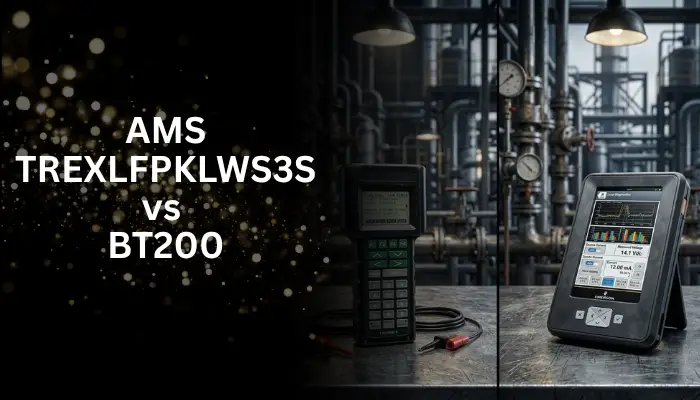
For a detailed technical comparison, our upcoming article Emerson AMS Trex vs Yokogawa BT200: Head-to-Head Analysis examines performance, features, and value propositions for both platforms.
Comparison Across Leading Platforms
Additional notable HART communicators include the Beamex MC6 (ideal for facilities requiring integrated calibration capabilities), Endress+Hauser Fieldcare (optimized for E+H device populations), and Fluke 750 Series (excellent for general-purpose use with strong calibration features).
Each platform brings specific strengths to different applications. Our comprehensive review Top 7 HART Communicators for Industrial Applications in 2024 provides detailed specifications, pricing information, and application-specific recommendations to guide your selection process.
For MME customers in the UAE and Middle East region, the Emerson AMS Trex available through MME-AE.com offers the best combination of universal compatibility, local support, and integration with regional asset management infrastructures.
HART Communicator Setup and Configuration: Step-by-Step Guide
Proper initial setup ensures your HART communicator operates reliably and efficiently throughout its service life. While specific procedures vary by manufacturer, these fundamental steps apply to virtually all modern HART field communicators.
Initial Power-Up and System Configuration
After unboxing your new communicator, begin with a full battery charge (for rechargeable models) or install fresh batteries. Power on the device and complete the initial setup wizard, which typically includes language selection, date/time configuration, regional settings, and user preferences.
Set appropriate timeout values for backlight and auto-sleep functions to balance usability with battery conservation. Configure sound and vibration alerts according to your work environment – vibration-only alerts work best in high-noise industrial settings.
Device Description Library Updates
Before attempting field device communication, update the DD library to ensure you have current device descriptions for all installed equipment. Connect your communicator to a PC with internet access (via USB, Wi-Fi, or Bluetooth depending on model) and access the manufacturer’s update portal.
Download all available DD updates and any firmware patches released since your device was manufactured. This process may take 30-60 minutes depending on library size and connection speed, but ensures maximum device compatibility from day one.
Connecting to HART Devices in the Field
Physical connection to HART devices requires appropriate connection cables and terminal adapters. Most communicators include alligator clips for temporary connections to device terminals, while test point adapters provide faster connections to properly equipped installations.
Connect the communicator’s positive lead to the positive side of the HART loop and the negative lead to the loop negative. Polarity matters in HART communication – reversed connections will prevent successful communication and may display error messages.
Once connected, initiate device polling through the communicator’s menu system. The communicator sends HART Command 0 (read unique identifier) to detect and identify the connected device. Successful communication displays the device tag, manufacturer, device type, and current status information.
Configuring Device Parameters
After establishing communication, you can view and modify device parameters. Modern HART communicators organize parameters into logical groups: basic setup, detailed setup, diagnostics, and calibration. Always create a configuration snapshot before making parameter changes – this enables easy restoration if issues arise.
Common configuration tasks include setting tag numbers, engineering units, damping values, sensor trim points, and alarm setpoints. The communicator validates parameter entries against allowed ranges defined in the device DD, preventing configuration errors that could impact process safety.
For detailed procedures on common configuration tasks, our tutorial How to Configure HART Devices Using Trex Communicator provides screen-by-screen guidance for the most frequently performed field operations.
Performing Device Calibration
HART communicators enable both analog and digital calibration procedures. Analog calibration (often called trim) adjusts the device’s 4-20mA output to match applied input signals. Digital calibration adjusts the sensor electronics for accurate process variable measurement.
Most modern smart transmitters support sensor trim functions that calibrate the sensor without breaking the process loop. For pressure transmitters, this involves applying known reference pressures and commanding the transmitter to adjust its internal calibration accordingly.
Temperature transmitters typically use RTD or thermocouple simulators to generate precise temperature signals. The communicator guides you through the calibration procedure, prompting for reference values at each calibration point and displaying pass/fail results based on specified tolerance criteria.
Our step-by-step guide Calibrating Transmitters with Trex Hart LHPKLWS3S demonstrates complete calibration workflows for pressure, temperature, and flow transmitters using modern HART communicator technology.
⚠️ Safety Warning:
Never connect or disconnect HART communicators in hazardous areas while the circuit is energized unless your communicator is certified intrinsically safe for the specific zone classification. Verify that your work permit authorizes live device work and that all safety protocols are followed. When in doubt, de-energize circuits before making connections.
Troubleshooting HART Communication Problems: Systematic Diagnostic Approach
HART communication failures frustrate technicians and consume valuable maintenance time. Developing a systematic troubleshooting methodology enables rapid problem identification and resolution, minimizing equipment downtime.
Common HART Communication Error Messages
Understanding error messages helps pinpoint the root cause of communication failures:
“No HART Device Detected” indicates the communicator cannot detect any HART response signal. This suggests problems with physical connections, loop power, device failure, or excessive loop resistance preventing HART signal transmission.
“Communication Timeout” occurs when the device receives a command but doesn’t respond within the expected timeframe. Causes include poor signal quality, electromagnetic interference, excessive loop capacitance, or device processor issues.
“Device Description Not Found” means the communicator successfully communicates with the device but lacks the appropriate DD file to fully interpret device data. Download and install the required DD from the manufacturer or communicator vendor.
“Multiple Devices Responding” indicates multiple HART devices connected to the same loop with duplicate polling addresses. This occurs in multi-drop configurations when address assignment conflicts exist.
Systematic Troubleshooting Steps
Step 1: Verify Loop Power – Use a multimeter to confirm adequate loop voltage. HART devices typically require 12-24VDC for operation. Voltage below minimum specifications prevents device operation and HART communication.
Step 2: Check Physical Connections – Inspect connection points for corrosion, loose terminals, or damaged wiring. Ensure communicator leads contact clean metal surfaces with secure mechanical connections. Test continuity through the entire loop circuit.
Step 3: Measure Loop Resistance – Total loop resistance must not exceed 1500 ohms for reliable HART communication. High resistance from long cable runs, corroded connections, or undersized wire impairs signal quality.
Step 4: Assess Signal Quality – Many communicators include signal strength or quality indicators. Poor signal quality suggests electrical noise, improper grounding, or capacitive loading from parallel cables or barrier installations.
Step 5: Eliminate Electromagnetic Interference – HART signals are susceptible to EMI from variable frequency drives, switching power supplies, radio transmitters, and other noise sources. Temporarily relocate the communicator or use shielded cables to determine if EMI causes communication problems.
Step 6: Check Loop Capacitance – Excessive cable capacitance attenuates HART signals. Total loop capacitance should not exceed 0.2 µF. Long cable runs, multiple devices in parallel, or certain barrier types contribute excessive capacitance.
Step 7: Verify Device Configuration – In multi-drop installations, confirm each device has a unique polling address (1-15). Point-to-point devices must be configured for polling address 0 to transmit analog signals.
Advanced Diagnostic Techniques
Professional HART communicators include advanced diagnostic capabilities that identify subtle problems invisible to basic troubleshooting. Signal analysis functions display HART waveforms, allowing visualization of signal distortion, noise, or attenuation.
Loop test functions measure critical parameters including loop current, loop voltage, and dynamic resistance without requiring additional test equipment. These measurements help identify power supply issues, wiring problems, or device malfunctions.
Device health diagnostics reveal internal device status including electronics temperature, sensor drift, output saturation, memory errors, and other conditions that impact reliability. Proactive monitoring of these parameters enables predictive maintenance before failures occur.
For comprehensive troubleshooting procedures covering the full range of HART communication issues, refer to our detailed guide Troubleshooting Common HART Communication Errors, which includes diagnostic flowcharts, voltage/current measurement tables, and solutions for even the most challenging communication problems.
🔧 Quick Diagnostic Checklist:
- ✓ Loop voltage between 12-30VDC
- ✓ Total loop resistance under 1500 ohms
- ✓ Connection polarity correct (+ to +, – to -)
- ✓ All connections clean and tight
- ✓ No EMI sources nearby (VFDs, transmitters, etc.)
- ✓ Current DD library installed on communicator
- ✓ Device polling address correct for configuration
Industry-Specific Applications of HART Communicators
HART communication technology adapts to the unique requirements of different industrial sectors. Understanding industry-specific applications helps optimize communicator usage and identify best practices relevant to your facility type.
Oil and Gas Production and Refining
In oil and gas operations, HART communicators are essential for maintaining the thousands of pressure, temperature, level, and flow transmitters that monitor production processes, pipeline operations, and refining units. The hazardous nature of these environments demands intrinsically safe communicators certified for Zone 0/1 (gas) and Zone 20/21 (dust) applications.
Upstream production facilities use HART communicators to monitor wellhead instrumentation in remote locations where centralized control systems may not reach. The ability to diagnose sensor issues in the field without requiring trips back to control rooms significantly reduces maintenance response times.
Downstream refining operations leverage advanced HART diagnostic capabilities to implement predictive maintenance programs. By regularly polling transmitter health metrics, maintenance teams identify degrading sensors before failures impact production or safety systems.
Our detailed case study Using HART Communicators in Oil & Gas Operations examines specific workflows, safety protocols, and optimization strategies for hydrocarbon processing facilities.
Chemical Manufacturing and Processing
Chemical plants deploy HART technology extensively for process control and safety instrumented systems. The diversity of chemical processes requires field communicators with broad device compatibility since installations often include transmitters from multiple manufacturers.
Batch processing operations particularly benefit from HART communicators’ ability to quickly reconfigure instruments for different product recipes. Rather than manually adjusting transmitter spans and alarm points at device terminals, technicians upload complete configuration sets from the communicator in seconds.
Safety integrity level (SIL) verification requires periodic proof testing of safety-instrumented function devices. HART communicators perform comprehensive device diagnostics, partial stroke valve testing, and sensor validation without process interruption, meeting safety requirements while minimizing production impact.
Our success story Reducing Downtime: Chemical Plant Success Story with Emerson Trex demonstrates how systematic HART-based diagnostics reduced unplanned maintenance interventions by 40% at a major specialty chemicals facility.
Water and Wastewater Treatment
Municipal water treatment and wastewater processing facilities face unique challenges including outdoor installations exposed to weather extremes, limited maintenance budgets, and geographically distributed infrastructure. HART communicators address these challenges through remote diagnostic capabilities and efficient multi-site workflows.
Level transmitters monitoring clarifiers, digesters, and storage tanks require periodic cleaning and calibration. HART communicators enable technicians to verify transmitter accuracy against reference measurements and perform calibration adjustments in minutes rather than hours.
Water quality analyzers (pH, conductivity, dissolved oxygen, turbidity) represent significant investments requiring careful maintenance. HART communication provides access to sensor diagnostics, cleaning cycle status, reagent levels, and calibration history – information critical for maintaining measurement accuracy.
Our application guide HART Communicators for Water Treatment Plants covers specific techniques for managing instrumentation across distributed treatment infrastructure with limited technical staff.
Power Generation Facilities
Coal, gas, nuclear, and renewable power generation facilities depend on precise process monitoring for efficiency, emissions compliance, and safety. HART instrumentation monitors critical parameters including steam pressure and temperature, feedwater flow, combustion air, flue gas composition, and turbine vibration.
The high-temperature, high-pressure environments in power plants demand rugged instrumentation and reliable communication. HART communicators access transmitter diagnostic data that identifies sensor degradation from thermal cycling, vibration, or process conditions before accuracy degrades beyond acceptable limits.
Emissions monitoring systems require quarterly calibration and audit trail documentation for regulatory compliance. HART communicators capture complete calibration records including as-found and as-left values, providing the documentation necessary for EPA and local regulatory reporting.
Best practices for power generation instrumentation maintenance are detailed in our guide Power Generation Facilities: HART Communication Best Practices.
Food and Beverage Processing
Food and beverage manufacturing combines challenging process conditions (cleaning-in-place cycles, temperature extremes, moisture) with stringent hygiene requirements. HART communicators configured with sanitary connection adapters enable device maintenance without compromising cleanroom environments or contaminating production areas.
Process validation and batch record keeping require comprehensive documentation of all instrument interactions. HART communicators with data logging and automated report generation capabilities streamline compliance with FDA regulations and food safety standards like HACCP and SQF.
Pharmaceutical Manufacturing
Pharmaceutical facilities operate under the most stringent regulatory requirements of any industry. 21 CFR Part 11 compliance demands comprehensive audit trails of all instrument configuration changes, calibration activities, and maintenance interventions.
HART communicators supporting electronic signatures, change control workflows, and automated documentation generation help pharmaceutical manufacturers meet regulatory requirements while maintaining production efficiency. Integration with calibration management systems provides centralized oversight of all instrumentation assets across multiple production suites.
HART Communicator Maintenance: Maximizing Tool Reliability and Longevity
Like any precision instrument, HART communicators require regular maintenance to ensure continued reliability. Implementing systematic maintenance practices extends device life, prevents field failures, and maintains measurement accuracy.
Physical Inspection and Cleaning
Monthly physical inspection identifies potential problems before they cause failures. Examine the case for cracks, check that all covers and port plugs seal properly, and verify that connection terminals show no corrosion or damage. Even minor case damage can compromise environmental sealing and intrinsic safety certification.
Clean the touchscreen using microfiber cloths and appropriate screen cleaning solutions. Never use harsh solvents, abrasive materials, or excessive moisture that might penetrate case seals. For heavily soiled devices, use isopropyl alcohol on non-screen surfaces to remove oil, grease, and industrial contaminants.
Inspect connection cables for insulation damage, broken wire strands, and proper strain relief attachment. Replace damaged cables immediately – faulty cables cause the majority of intermittent communication problems experienced in the field.
Battery Care and Power Management
Battery maintenance significantly impacts communicator reliability. For rechargeable lithium-ion batteries, avoid complete discharge cycles which reduce battery life. Charge batteries when they reach 20-30% capacity rather than waiting for complete depletion.
Store communicators with batteries charged to approximately 50% capacity if they won’t be used for extended periods. Full discharge during storage can permanently damage lithium-ion cells, while storage at full charge accelerates capacity degradation.
For communicators using disposable batteries, remove batteries during extended storage periods to prevent leakage damage. Always install fresh batteries as complete sets – never mix old and new batteries or different battery brands.
Our comprehensive guide Extending Battery Life on Portable HART Communicators provides advanced optimization techniques including power management settings, operating mode selection, and battery conditioning procedures.
Software and Firmware Updates
Manufacturers regularly release firmware updates that improve functionality, add device support, fix bugs, and address security vulnerabilities. Establish a quarterly schedule to check for and install available updates.
Before updating firmware, back up all stored device configurations, user preferences, and data logs. While manufacturers design update processes to preserve data, having a backup prevents data loss if unexpected issues occur during the update process.
Device Description libraries require more frequent updates than firmware. New device releases, device revisions, and DD file corrections occur continuously. Update DD libraries monthly or whenever you encounter unsupported devices in the field.
For critical production support communicators, test firmware updates on a spare device before deploying to primary field tools. This prevents introducing unexpected behavior or compatibility issues during critical maintenance windows.
The step-by-step tutorial Updating Firmware on Emerson AMS Trex Device Communicator demonstrates proper update procedures including backup, installation, verification, and rollback if needed.
Calibration and Performance Verification
While HART communicators don’t typically require calibration (they don’t make measurements themselves), connection circuit testing verifies proper operation. Annually verify that connection circuits correctly measure loop current and voltage within manufacturer specifications.
Test HART communication functionality by connecting to known-good devices and verifying successful communication, parameter reading, and configuration changes. Document test results to establish baseline performance for comparison in future verification tests.
Data Backup and Configuration Management
Modern HART communicators store valuable information including device configurations, calibration records, maintenance notes, and diagnostic histories. Implement regular backup procedures to prevent data loss from device failure, damage, or loss.
Most communicators support automatic synchronization with PC-based asset management systems. Configure automatic backup to occur whenever the communicator connects to the network, ensuring continuous data protection without requiring manual intervention.
For standalone communicators without automatic backup, establish weekly manual backup procedures. Export all stored configurations and data logs to a PC, network storage, or cloud-based backup system.
Our guide Data Management: Backing Up Your HART Communicator Settings covers comprehensive backup strategies, restoration procedures, and integration with plant-wide asset management systems.
✅ Maintenance Schedule:
Daily: Inspect for physical damage, verify battery charge level
Weekly: Clean touchscreen and case, backup stored data
Monthly: Update DD libraries, inspect cables and connections
Quarterly: Check for firmware updates, verify communication functionality
Annually: Performance verification testing, intrinsic safety recertification (if required)
Complete maintenance procedures and preventive maintenance schedules are detailed in Essential Maintenance Tips for Your HART Communicator.
Advanced HART Technologies: HART-IP and Wireless HART
HART technology continues evolving to address modern industrial automation requirements. Understanding advanced HART implementations helps future-proof your instrumentation infrastructure and maximize return on investment.
HART-IP: HART Over Ethernet Networks
HART-IP extends traditional HART communication over Ethernet TCP/IP networks, enabling HART devices to communicate directly with enterprise systems, cloud applications, and mobile devices. This technology eliminates the need for dedicated HART multiplexers and gateways in many applications.
HART-IP maintains complete compatibility with existing HART command structures while adding network services like device discovery, publish-subscribe data distribution, and secure authentication. Field communicators with HART-IP support can access devices anywhere on the plant network without physical connection to field wiring.
Implementation considerations include network security (HART-IP devices must be properly segmented from enterprise IT networks), bandwidth planning (though HART-IP data rates are modest), and switch configuration (multicast support may be required for some applications).
Our technical comparison HART-IP vs Traditional HART: Understanding the Differences examines application requirements, migration strategies, and performance characteristics for both technologies.
WirelessHART: Wireless Sensor Networks
WirelessHART extends HART protocol into self-organizing wireless mesh networks ideal for monitoring applications where wiring is impractical or cost-prohibitive. The technology operates in the 2.4 GHz ISM band using IEEE 802.15.4 compatible radios with time-synchronized mesh networking.
Modern HART communicators with WirelessHART support can configure, commission, and troubleshoot wireless field devices just like traditional wired devices. The same Device Description files, command structures, and workflows apply to both wired and wireless devices, minimizing training requirements.
WirelessHART networks provide excellent reliability through frequency hopping, redundant communication paths, and automatic route healing. Battery-powered wireless devices typically operate for 5-10 years on a single battery set, making them practical for widespread deployment.
Integration with Asset Management Systems
Enterprise asset management platforms like Emerson AMS Suite provide centralized management of all HART devices across entire facilities. These systems collect continuous diagnostic data, manage device configurations, schedule calibration activities, and provide predictive analytics that identify potential failures before they occur.
HART communicators serve as the interface between field devices and asset management systems. Configurations created in the asset management system download to field devices via the communicator, while diagnostic data and as-found calibration values upload from the field to the central database.
This bidirectional integration eliminates manual data entry, reduces configuration errors, and provides comprehensive audit trails for regulatory compliance. Version control ensures that only approved configurations are deployed to field devices, preventing unauthorized parameter changes.
The Emerson AMS Trex Device Communicator exemplifies this integration, offering seamless synchronization with AMS Device Manager, AMS Wireless Configurator, and other AMS Suite applications.
Detailed integration procedures and configuration workflows are covered in Integrating HART Communicators with AMS Suite.
Predictive Maintenance and Advanced Diagnostics
Modern HART devices provide extensive diagnostic information beyond basic process measurements. Smart transmitters monitor their own health, tracking parameters like electronics temperature, power supply voltage, sensor signal strength, memory integrity, and calibration drift.
Advanced HART communicators extract and analyze this diagnostic data, identifying subtle degradation patterns that indicate impending failures. Vibration in a transmitter-mounted sensor, gradual drift in a pressure sensor’s zero point, or increasing electronics temperature may individually seem insignificant but collectively indicate developing problems.
Predictive analytics algorithms process historical diagnostic data to establish baseline performance profiles for each device. Deviations from these baselines trigger maintenance alerts, allowing technicians to address issues during planned maintenance windows rather than responding to emergency failures.
The economic benefits are substantial: studies show predictive maintenance programs reduce maintenance costs by 20-30%, decrease unplanned downtime by 40-50%, and extend equipment life by 20-25%. HART communicators serve as the primary data collection tools enabling these programs.
Our advanced guide Advanced Diagnostics Using Emerson Trex Communicator demonstrates diagnostic techniques, data interpretation strategies, and predictive maintenance program implementation.
Making the Right Investment: ROI and Cost-Benefit Analysis
HART communicators represent significant capital investments, particularly for high-end universal devices. Understanding the total cost of ownership and quantifying benefits helps justify purchases and select the most cost-effective solution.
Direct Cost Savings
Reduced calibration time: HART communicators typically reduce calibration time by 50-70% compared to manual procedures using separate signal generators and measurement devices. A facility performing 1,000 calibrations annually at 30 minutes per calibration saves 250-350 labor hours through communicator adoption.
Eliminated troubleshooting time: Advanced diagnostics pinpoint problems immediately rather than requiring time-consuming trial-and-error approaches. Typical troubleshooting time reductions of 60-80% translate to significant labor savings and faster restoration of failed instruments.
Consolidated tool inventory: Universal HART communicators replace multiple manufacturer-specific configuration tools, dedicated calibrators, and test equipment. Tool consolidation reduces capital expenses, simplifies training, and minimizes spare parts inventory.
Indirect Benefits and Risk Reduction
Improved documentation: Automated record-keeping eliminates manual documentation errors, provides comprehensive audit trails, and simplifies regulatory compliance. This is particularly valuable in regulated industries like pharmaceuticals, food processing, and environmental monitoring.
Reduced process variability: Accurate, regularly calibrated instrumentation improves process control, reducing product quality variations and off-specification production. Even small reductions in process variability generate substantial savings in high-volume operations.
Extended equipment life: Predictive maintenance identifies problems early, preventing catastrophic failures that damage expensive equipment. Condition-based maintenance replaces time-based approaches, reducing unnecessary maintenance while addressing actual needs promptly.
Enhanced safety: Reliable safety instrumented systems depend on properly maintained field devices. HART communicators enable comprehensive SIF device testing, verification, and documentation, reducing safety system failure risk and associated liability.
Total Cost of Ownership Analysis
When evaluating HART communicators, consider total cost of ownership rather than just purchase price. Lower-cost devices may have limited device support, require expensive annual software subscriptions, lack integration capabilities, or need more frequent replacement.
Factors affecting TCO include initial purchase price, annual software/support subscriptions, DD library update costs, calibration service expenses, expected service life, compatibility with existing systems, and vendor support quality.
Premium devices like the Emerson AMS Trex Device Communicator typically offer superior long-term value through comprehensive device support, rugged construction providing 10+ year service life, included DD updates, and seamless integration with existing automation infrastructure.
Our detailed financial analysis Cost-Benefit Analysis: Investing in Quality HART Communicators provides ROI calculation templates, TCO comparison spreadsheets, and case studies demonstrating real-world returns from communicator investments.
Buying Guide: What to Look for When Purchasing a HART Communicator
Armed with understanding of HART technology, applications, and value propositions, you’re ready to make an informed purchase decision. This buying guide summarizes critical evaluation criteria.
Assess Your Device Population
Create an inventory of all HART-enabled devices in your facility including manufacturer, model, and quantity. This inventory identifies the scope of required device support and reveals whether you need universal compatibility or can use a manufacturer-specific tool.
Facilities with homogeneous device populations (primarily one manufacturer) may find manufacturer-specific communicators cost-effective. However, diverse multi-vendor installations require universal communicators with comprehensive DD libraries.
Define Your Application Requirements
Consider how the communicator will be used: basic configuration and calibration, advanced diagnostics, integration with asset management systems, or comprehensive device lifecycle management. Different use cases favor different device features and capabilities.
Technicians performing field troubleshooting prioritize rugged construction, long battery life, and intuitive interfaces. Engineering teams configuring devices during commissioning value PC integration, batch configuration capabilities, and comprehensive documentation features.
Verify Hazardous Area Certification
If any portion of your facility includes classified hazardous areas, intrinsic safety certification is mandatory. Verify that certifications cover your specific zone classifications and document certification details in your purchase specifications.
Global facilities may require multiple regional certifications. Communicators with ATEX, IECEx, FM, CSA, and NEPSI approvals provide maximum flexibility for multinational operations.
Evaluate Integration Capabilities
If you use or plan to implement asset management software, verify that your chosen communicator integrates seamlessly. Native integration eliminates manual data transfer, reduces errors, and enables advanced analytics capabilities.
Consider future requirements beyond immediate needs. Data export capabilities, API availability, and open communication standards provide flexibility for custom integrations and future system expansions.
Compare Vendor Support and Service
Technical support quality, DD update frequency, firmware update availability, and calibration service accessibility significantly impact long-term satisfaction. Evaluate vendor support infrastructure including local service centers, technical support availability, and response time commitments.
For facilities in the Middle East, purchasing from regional distributors like MME-AE.com provides advantages including local inventory availability, regional technical support, and familiarity with area-specific requirements and standards.
Request Demonstration and Trial Period
Before committing to a purchase, request hands-on demonstrations with your actual devices. This verifies compatibility, evaluates user interface intuitiveness, and allows technicians who will use the tool daily to provide input.
Some vendors offer trial periods or rental programs allowing extended evaluation in your actual operating environment. Real-world testing reveals practical considerations invisible in specifications or demonstrations.
Our comprehensive buyer’s guide 10 Things to Consider Before Buying a HART Communicator expands on these criteria with detailed evaluation frameworks, vendor comparison matrices, and specific model recommendations.
Product Comparison: Leading HART Communicators
To help narrow your selection, here’s a comparison of leading HART communicator platforms based on capabilities, applications, and value propositions.
Emerson AMS Trex Device Communicator – Best Overall Universal Solution
The Emerson AMS Trex stands as the industry’s most comprehensive universal communicator, supporting HART, FOUNDATION Fieldbus, WirelessHART, and numerous manufacturer-specific protocols. Its 5.7-inch touchscreen, intuitive interface, and rugged construction make it ideal for demanding field applications.
Best for: Facilities requiring universal device support, integration with AMS Suite, advanced diagnostics capabilities, or multi-protocol communication.
Key advantages: Broadest device compatibility, exceptional build quality, comprehensive diagnostics, seamless AMS integration, global hazardous area certifications.
Trex Hart LHPKLWS3S – Value-Focused HART Specialist
For facilities focused primarily on HART communication without requiring multi-protocol support, the Trex Hart LHPKLWS3S offers excellent value. It provides comprehensive HART device support with intuitive operation at a more accessible price point.
Best for: HART-only facilities, budget-conscious buyers, organizations not requiring advanced asset management integration.
Key advantages: Excellent HART support, competitive pricing, solid construction, straightforward operation.
Detailed performance comparisons between these platforms appear in our article Trex Hart LHPKLWS3S vs Competitors: Which Communicator Wins?
Yokogawa BT200 – Excellence for Yokogawa Ecosystems
The Yokogawa BT200 excels in facilities with significant Yokogawa device populations, providing optimized support for Yokogawa-specific features while maintaining third-party HART compatibility.
Best for: Yokogawa DCS users, facilities with predominantly Yokogawa field devices, organizations preferring Yokogawa ecosystem integration.
Key advantages: Optimized Yokogawa support, lightweight design, user-friendly interface, competitive pricing.
A thorough technical comparison appears in Emerson AMS Trex vs Yokogawa BT200: Head-to-Head Analysis.
Additional Options Worth Considering
Other notable platforms include the Beamex MC6 (integrated HART communication and documenting calibrator), Endress+Hauser Fieldcare (PC-based solution with comprehensive E+H support), Fluke 750 Series (process calibrator with HART capability), and several manufacturer-specific tools from ABB, Siemens, and Honeywell.
Each platform brings specific strengths to particular applications. Our comprehensive review Top 7 HART Communicators for Industrial Applications in 2024 examines all major platforms with detailed feature comparisons, pricing analysis, and application-specific recommendations.
🏆 Our Recommendation:
For most industrial facilities requiring comprehensive device support, advanced diagnostics, and long-term reliability, we recommend the Emerson AMS Trex Device Communicator.
Its universal protocol support eliminates compatibility concerns, rugged construction ensures longevity in harsh environments, and AMS Suite integration provides a clear upgrade path to predictive maintenance and advanced asset management.
For Middle East facilities, purchasing through MME-AE.com provides regional support, local inventory, and expertise with area-specific requirements and standards.
Understanding HART Communicator Specifications
Technical specifications reveal important details about communicator capabilities, but interpreting specifications requires understanding what various parameters actually mean in practical applications.
Key Specifications Explained
Supported Protocols: Lists communication protocols the device supports (HART, FOUNDATION Fieldbus, WirelessHART, Profibus PA, etc.). Universal communicators support multiple protocols; specialized devices focus on one or two.
Device Description Library Size: Indicates how many different device types the communicator supports. Larger libraries (3,000+ devices) provide better universal compatibility. Verify that specific manufacturers and models in your facility appear in the supported device list.
Display Specifications: Screen size (diagonal measurement), resolution (pixels), and type (LCD, OLED, etc.). Larger high-resolution displays improve usability but consume more power. Sunlight-readable displays are essential for outdoor work.
Battery Life: Rated operating time on fully charged battery under typical use conditions. Real-world battery life varies based on backlight settings, communication frequency, and environmental conditions. Look for 10+ hours minimum for full-shift operation.
Environmental Ratings: IP (Ingress Protection) rating indicates dust and moisture resistance. IP65 provides dust-tight and water jet resistance suitable for most industrial applications. IP67 adds temporary immersion protection. Operating temperature range should cover your climate extremes.
Drop Test Rating: Maximum drop height the device survives. Professional devices typically rate for 1-2 meter drops onto concrete. Higher ratings indicate more rugged construction but may increase weight.
Intrinsic Safety Certifications: Lists certifying bodies (ATEX, IECEx, FM, CSA, etc.) and approved classifications. Verify certifications cover your facility’s specific zone classifications. Global certifications provide flexibility for multinational operations.
Memory Capacity: Amount of internal storage for device configurations, data logs, and documentation. Modern devices should support thousands of stored configurations. Expandable memory via SD cards provides additional capacity for extensive data logging.
Connectivity Options: Available interfaces for PC connection and data transfer (USB, Wi-Fi, Bluetooth, Ethernet). Multiple connectivity options provide flexibility for different workflow requirements.
Our detailed specifications guide Understanding Trex Communicator Specifications & Features provides comprehensive explanations of all technical parameters with practical interpretation guidance.
Conclusion: Maximizing Value from Your HART Communicator Investment
HART field communicators represent essential tools for modern industrial maintenance, providing capabilities that dramatically improve efficiency, reduce downtime, and enhance safety. Success with these powerful instruments requires thoughtful selection, proper setup, systematic maintenance, and continuous skill development.
Key Takeaways
1. Select the right tool for your application. Universal communicators like the Emerson AMS Trex provide maximum flexibility and long-term value for diverse installations, while specialized devices may suffice for homogeneous environments.
2. Invest in proper training. Even the most capable communicator delivers limited value if users don’t understand its full capabilities. Comprehensive training on device operation, HART protocol fundamentals, and troubleshooting techniques maximizes return on investment.
3. Implement systematic maintenance. Regular physical inspection, battery care, software updates, and data backup ensure continued reliability. Preventive maintenance is far less disruptive than field failures during critical work.
4. Integrate with broader asset management. Standalone communicator use provides immediate benefits, but integration with enterprise asset management systems unlocks predictive maintenance, configuration management, and comprehensive documentation capabilities.
5. Stay current with technology evolution. HART-IP, WirelessHART, and predictive analytics represent the future of field device communication. Select communicators and architectures that support these advanced capabilities as you implement them.
Next Steps
Armed with comprehensive understanding of HART communicator technology, selection criteria, and application best practices, you’re prepared to make informed decisions about your facility’s field communication infrastructure.
For facilities in the UAE and broader Middle East region, MME-AE.com provides expert consultation, comprehensive product selection, local technical support, and calibration services for all major HART communicator platforms.
Explore our growing library of detailed technical guides, product comparisons, and industry-specific application articles to deepen your HART communication expertise:
- Product Comparisons: Detailed feature and performance comparisons across leading HART communicator platforms
- Technical Guides: Step-by-step procedures for configuration, calibration, and troubleshooting
- Industry Applications: Sector-specific best practices for oil & gas, chemical processing, water treatment, and power generation
- Buying Guides: Selection frameworks, ROI analysis, and vendor evaluation criteria
- Maintenance Resources: Preventive maintenance schedules, firmware update procedures, and data management strategies
- Advanced Topics: HART-IP implementation, wireless networks, asset management integration, and predictive maintenance
Ready to Upgrade Your Field Communication Capabilities?
Discover why the Emerson AMS Trex Device Communicator is trusted by leading industrial facilities worldwide for universal device support, advanced diagnostics, and unmatched reliability.
📚 Continue Learning:
This pillar guide provides comprehensive coverage of HART communicator fundamentals. Explore our detailed cluster articles for in-depth coverage of specific topics:
- How to Configure HART Devices Using Trex Communicator
- Step-by-Step: Calibrating Transmitters with Trex Hart LHPKLWS3S
- Troubleshooting Common HART Communication Errors
- Top 7 HART Communicators for Industrial Applications in 2024
- 10 Things to Consider Before Buying a HART Communicator
- Integrating HART Communicators with AMS Suite
Each article provides specialized knowledge building on the foundation established in this complete guide.
Whether you’re maintaining a single production line or managing instrumentation across multiple facilities, the right HART communicator transforms field device maintenance from time-consuming manual procedures to efficient, data-driven workflows. Invest in quality tools, comprehensive training, and systematic processes to maximize the substantial benefits HART technology offers.
Have questions about HART communicators, need assistance selecting the right device for your application, or require technical support? Contact the instrumentation experts at MME-AE.com for personalized consultation and support.





د.إ0.00 (excl.VAT)
(5 reviews)


د.إ0.00 (excl.VAT)
(4 reviews)






 Bench Multimeters