




د.إ0.00 (excl.VAT)
(5 reviews)

د.إ0.00 (excl.VAT)
(4 reviews)

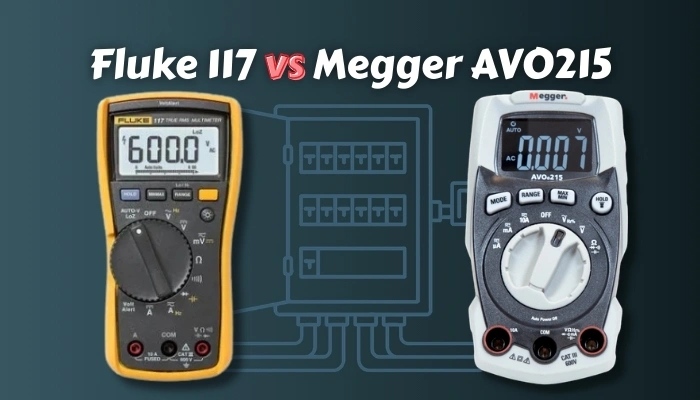
The Fluke 11x series includes four popular True-RMS digital multimeters: Fluke 114, Fluke 115, Fluke 116, and Fluke 117. While these models share a common foundation, each is designed with specific users in mind, such as HVAC technicians, field service engineers, and commercial electricians. Understanding the real differences between these models helps you choose the right tool that will save time and improve the precision of your work. This comparison guide includes a feature-by-feature analysis, pros and cons of each model, recommendations for different user groups, and a visual comparison table to make your decision-making process easier.
All models in the Fluke 11x series—including the Fluke 114, Fluke 115, Fluke 116, and Fluke 117—come equipped with a range of shared features designed to provide accuracy, durability, and ease of use in various environments:
True-RMS Measurement for precise AC measurements, even with complex, non-sinusoidal waveforms.
6000-Count Backlit Display for clear, easy-to-read measurements in any lighting conditions.
AC/DC Voltage Measurement up to 600V, allowing for versatile testing in both residential and industrial applications.
Resistance and Continuity Testing, plus a CAT III 600V safety rating for added protection during electrical work.
LED White Backlight for improved visibility in low-light environments, ensuring clarity during fieldwork.
These shared specifications guarantee that all models in the Fluke 11x series deliver the signature reliability and accuracy that Fluke is known for, making them trusted tools for professionals across various industries.
Below is a visual chart comparing core features of the 114, 115, 116, and 117:
| Feature | Fluke 114 | Fluke 115 | Fluke 116 | Fluke 117 |
|---|---|---|---|---|
| True-RMS | ✔ | ✔ | ✔ | ✔ |
| AC/DC Voltage (600V) | ✔ | ✔ | ✔ | ✔ |
| AC/DC Current | ✖ | ✔ (up to 20A) | ✔ | ✔ (up to 20A) |
| Microamps (µA) | ✖ | ✖ | ✔ | ✖ |
| Temperature Measurement | ✖ | ✖ | ✔ (Type-K) | ✖ |
| Frequency Measurement | ✖ | ✔ | ✔ | ✔ |
| Capacitance Measurement | ✖ | ✔ | ✔ | ✔ |
| Resistance | ✔ | ✔ | ✔ | ✔ |
| Continuity Beeper | ✔ | ✔ | ✔ | ✔ |
| Diode Test | ✖ | ✔ | ✔ | ✔ |
| LoZ (Ghost Voltage Removal) | ✔ | ✔ | ✔ | ✔ |
| VoltAlert (Non-contact Voltage) | ✖ | ✖ | ✖ | ✔ |
| Min/Max/Average Recording | ✖ | ✔ | ✔ | ✔ |
| Backlight Display | ✔ | ✔ | ✔ | ✔ |
| Safety Rating | CAT III 600V | CAT III 600V | CAT III 600V | CAT III 600V |
| Display Count | 6000-count | 6000-count | 6000-count | 6000-count |
| Best For | Basic troubleshooting | General diagnostics | HVAC professionals | Commercial electricians |
| Datasheet | View Datasheet | View Datasheet | View Datasheet | View Datasheet |
Best For: Entry-level electricians, home service techs

✅ Pros:
❌ Cons:
Best For: Service technicians needing full diagnostics

✅ Pros:
❌ Cons:
Verdict: Excellent all-around meter for general electronics and electrical troubleshooting.
Best For: HVAC technicians who need accurate electrical measurements plus temperature and microamp testing for flame sensors.
✅Pros:
Built-in thermometer for HVAC applications
Measures microamps for testing flame sensors
True RMS for accurate measurements on non-linear loads
Compact design with easy one-hand operation
Min/Max/Average recording
❌Cons:
No milliamp range (limited for some specialized tasks)
No LoZ (Low Input Impedance) function for eliminating ghost voltage
Not as feature-rich for general electronics compared to Fluke 115 or 117

Verdict:The Fluke 116 is a highly reliable HVAC-focused digital multimeter. With its built-in temperature measurement and microamp range, it’s the perfect companion for heating, ventilation, and air-conditioning technicians who need accurate diagnostics on flame sensors, motors, and HVAC systems.
Best For: Commercial electricians, building maintenance teams

Verdict: The most advanced and complete of the four—ideal for commercial settings.
In this section, we provide a quick comparison of the features and applications of different models from the Fluke series.
while all four models in the Fluke 11x Series offer True-RMS accuracy and core electrical testing functions, their key differences lie in their specialized features: the Fluke 114 is a basic troubleshooting tool with ghost voltage (LoZ) elimination but lacks current, frequency, and diode testing; the Fluke 115 adds those core features but omits temperature and non-contact voltage detection; the Fluke 116 is purpose-built for HVAC professionals with built-in temperature and microamp capabilities; and the Fluke 117 stands out with VoltAlert™ non-contact voltage detection and LoZ, making it ideal for commercial electricians working in high-traffic or high-risk environments. Choosing the right model depends on your field and whether you prioritize thermal testing, ghost voltage suppression, or safety-focused features like contactless detection.
Need pricing or compatibility info? Click here to get details directly.



No account yet?
Create an AccountJust tell us what you need and our specialized sales team will contact you fast to help with availability, pricing, and delivery. Even if it’s not listed on our site





 Bench Multimeters