



AED 7,998 (excl.VAT)
(2 reviews)


Air & Gas Measurement Air Quality Meter Temperature / Humidity Temperature and Humidity Datalogger Pressure
AED 2,865 (excl.VAT)
(2 reviews)





Air Quality Meter Price
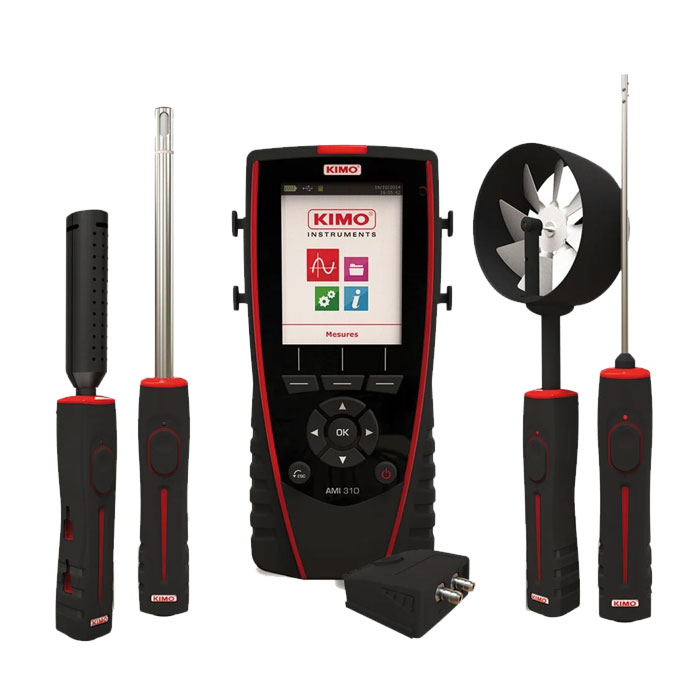
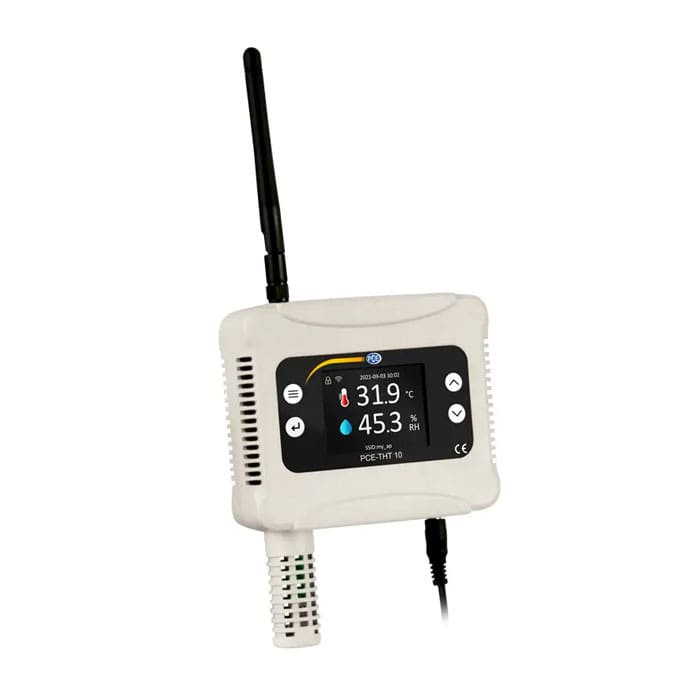
The price of air quality meters varies based on their features, measurement capabilities, brand, and application. Basic models, typically designed for home use, are affordable and measure common pollutants such as PM2.5 and PM10, making them suitable for monitoring indoor air quality. Mid-range devices offer additional features like CO2 and VOC measurement, as well as options such as real-time alerts and app connectivity, making them ideal for small offices, schools, or moderate professional use. Advanced industrial-grade air quality meters, designed for factories, laboratories, and professional environments, provide precise monitoring of multiple parameters, including temperature and humidity, and often include advanced data logging and wireless connectivity. Trusted brands like Testo, and Extech are generally more expensive due to their superior accuracy and durability. Choosing the right air quality meter depends on your specific needs. While basic models are sufficient for general indoor monitoring, mid-range or high-end meters are essential for environments requiring detailed analysis and reliability. Investing in a high-quality air quality meter ensures accurate results and long-term value.
Types of Air Quality Meters
Air quality meters are devices designed to measure and monitor the concentration of pollutants and environmental conditions in the air. The type of air quality meter you choose depends on the specific pollutants you need to monitor, as well as the intended application. Here are the main types of air quality meters:
Particulate Matter Meters (PM)
Particulate Matter (PM) meters are designed to measure airborne particles, such as PM2.5 (particles smaller than 2.5 micrometers) and PM10 (particles smaller than 10 micrometers). These devices are widely used in applications like indoor air quality monitoring, industrial emissions control, and environmental assessments. They are particularly effective in identifying harmful particulates such as dust, smoke, and other fine particles that pose risks to respiratory health, making them essential tools for maintaining a healthier living and working environment.
Carbon Dioxide Meters (CO2)
Carbon dioxide (CO2) meters are specialized devices used to measure the concentration of CO2 in the air. These meters are essential for maintaining proper ventilation and are commonly used in HVAC systems, greenhouses, offices, and classrooms. By providing accurate readings, they help ensure that CO2 levels remain within safe limits, making them ideal for monitoring indoor air quality and creating healthier and more comfortable environments.
Volatile Organic Compound (VOC) Meters
Volatile Organic Compound (VOC) meters are designed to detect harmful VOCs such as benzene, formaldehyde, and other chemicals often emitted from paints, solvents, and industrial processes. These meters play a critical role in industrial hygiene, laboratory safety, and indoor air quality assessments. They are particularly effective in identifying chemical pollutants in both residential and industrial environments, making them essential for maintaining a safe and healthy atmosphere.
Multi-Gas Meters
Multi-gas meters are advanced devices that simultaneously measure multiple gases, including CO2, CO (carbon monoxide), NO2 (nitrogen dioxide), and O3 (ozone). These versatile instruments are widely used in industrial safety, environmental monitoring, and workplace assessments, providing accurate and reliable data in diverse settings. Their ability to monitor various gases at once makes them ideal for comprehensive air quality assessments in complex environments, ensuring safety and compliance with environmental standards.
Humidity and Temperature Meters
Humidity and temperature meters are designed to monitor air temperature and relative humidity levels, providing crucial data for maintaining optimal environmental conditions. These devices are widely used in HVAC systems, storage facilities, and laboratories, where precise control of temperature and humidity is essential. By ensuring stable and comfortable indoor environments, humidity and temperature meters play a vital role in creating efficient and controlled spaces.
Formaldehyde meters (HCHO)
Formaldehyde (HCHO) meters are specialized devices used to detect and measure formaldehyde levels in the air. These meters are particularly useful for indoor air quality assessments, especially in spaces containing new furniture, flooring, or building materials that may emit formaldehyde. By identifying potential health hazards associated with formaldehyde exposure, these meters help create safer and healthier living and working environments.
Indoor vs Outdoor Air Quality Meters
Air quality meters are categorized into indoor and outdoor types, each designed for specific environments. Indoor air quality meters focus on detecting pollutants commonly found indoors, such as CO2, VOCs, and PM2.5, ensuring a healthy and comfortable living or working space. In contrast, outdoor air quality meters are built to monitor a wider range of pollutants, including industrial emissions and environmental hazards, making them essential for assessing air quality in external and industrial settings.
Portable vs Stationary Meters
Air quality meters can be classified as portable or stationary, each suited for different needs. Portable meters are lightweight, easy to use, and ideal for spot-checking air quality across multiple locations, offering flexibility and convenience. On the other hand, stationary meters are permanently installed for continuous monitoring, often equipped with advanced features like data logging and remote access, making them perfect for long-term air quality assessment in fixed environments.
Applications of Air Quality Meter:
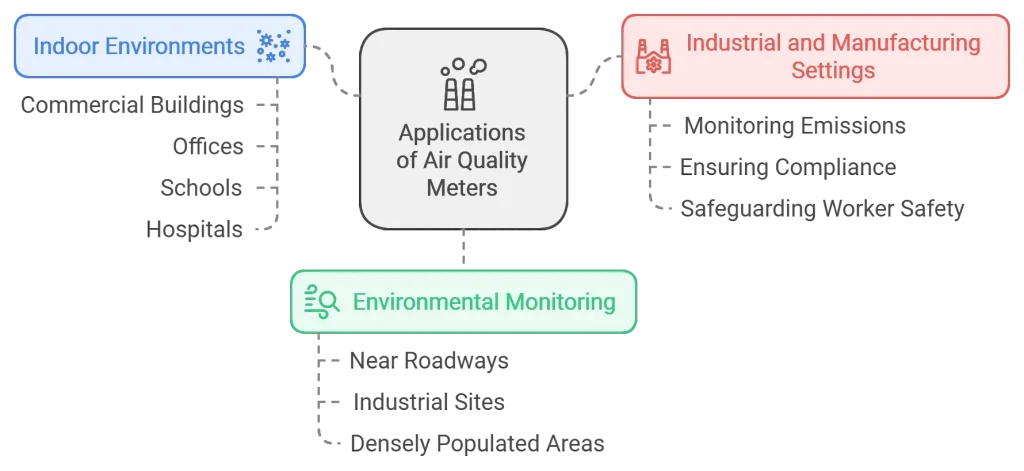
Air quality meters may be utilized in many different places, such as commercial enterprises and building sites. In addition, they may be employed in commercial, residential, and transit centers.
Indoor Environments:
Air quality meters find extensive applications in commercial buildings, offices, schools, hospitals, and other indoor environments. They help identify and mitigate indoor air quality issues, including inadequate ventilation, high levels of airborne contaminants, and presence of harmful gases, contributing to a healthier and more productive environment.
Industrial and Manufacturing Settings:
In industrial and manufacturing settings, air quality meters play a crucial role in monitoring emissions, ensuring compliance with environmental regulations, and safeguarding worker safety. They enable early detection of pollutants, facilitating prompt corrective actions and reducing the risk of occupational health hazards.
Environmental Monitoring:
Air quality meters are instrumental in outdoor environmental monitoring initiatives. They aid in assessing air pollution levels near roadways, industrial sites, and densely populated areas. By collecting data on pollutant concentrations, these devices contribute to urban planning, policy development, and pollution control strategies.
 Bench Multimeters