
Contact vs Non-Contact Thermometers: Which Industrial Thermometer Should You Use?
Did you know that choosing the wrong thermometer in industrial applications can lead to costly measurement errors, unsafe conditions, and downtime? At home or in medical use, a simple digital thermometer may be enough, but in industries such as steel production, HVAC systems, and power plants, selecting between a contact thermometer and a non contact thermometer (infrared thermometer) is critical. Contact thermometers remain the gold standard for accuracy and laboratory calibration, while non contact thermometers offer speed, safety, and flexibility for monitoring hot surfaces, moving equipment, or hazardous areas. In this article, we’ll compare contact vs non contact thermometers, explore their advantages and limitations, and help you decide which industrial thermometer best suits your needs.
What is a Contact Thermometer?
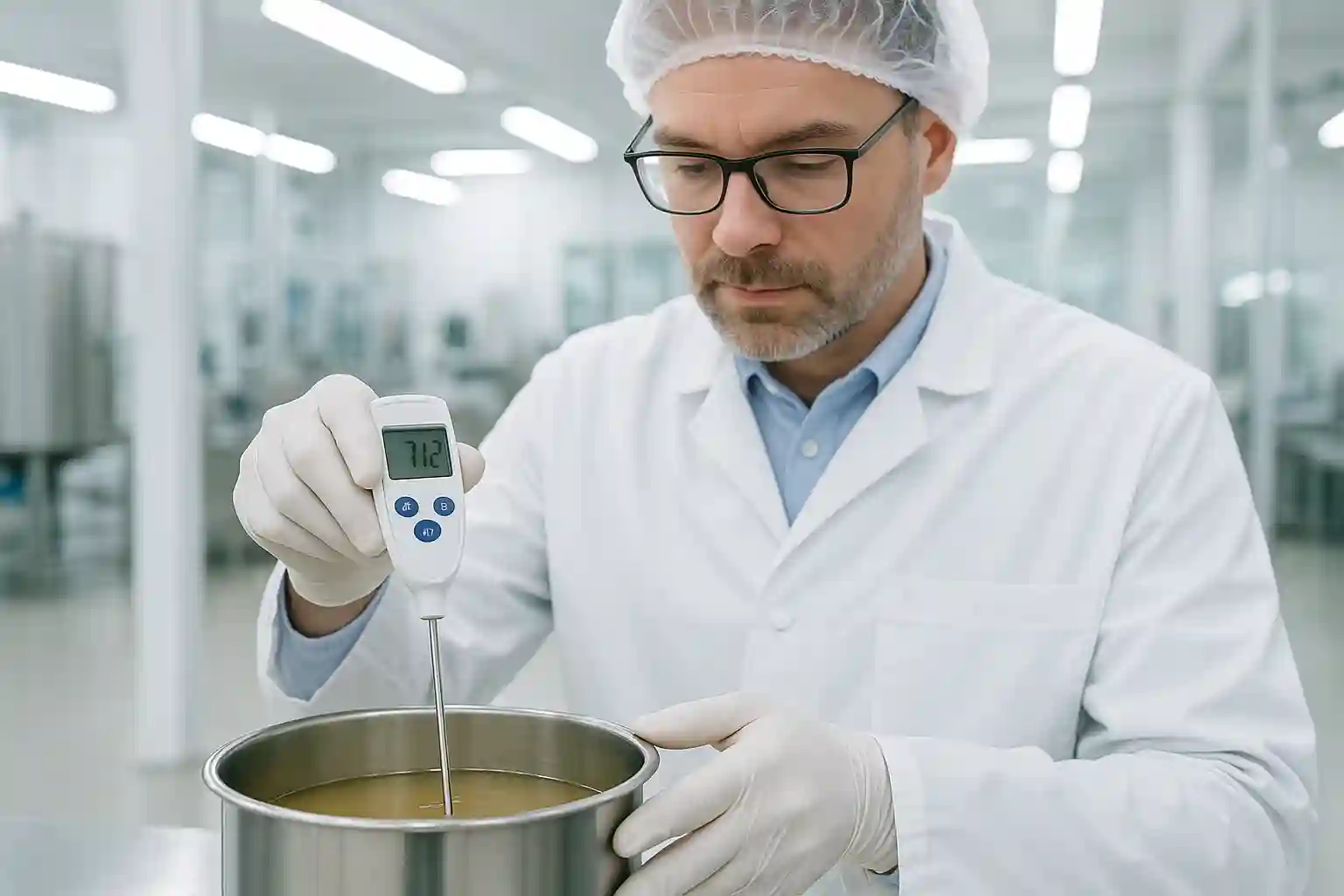
A contact thermometer measures temperature by physically touching the surface, liquid, or medium. The probe or sensor absorbs heat and translates it into a readable value.
Common Types of Contact Thermometers
- Probe thermometer – widely used in food safety and industrial testing.
- RTD thermometer (Resistance Temperature Detector) – highly accurate, used in laboratories and calibration labs.
- Thermocouple thermometer – suitable for wide temperature ranges in industry.
- Digital thermometer – portable and versatile for everyday industrial measurements.
High accuracy (±0.1°C in RTDs).
Reliable calibration reference in laboratories.
Suitable for controlled environments such as pharmaceuticals and food processing.
Requires direct touch, not safe for hot or hazardous surfaces.
Slower response time compared to infrared thermometers.
Risk of contamination in sensitive environments.
✅ Best use case: When accuracy and precision are more important than speed.
What is a Non-Contact Thermometer?
A non contact thermometer, also known as an infrared thermometer (IR thermometer), measures temperature from a distance by detecting infrared radiation emitted from the surface.
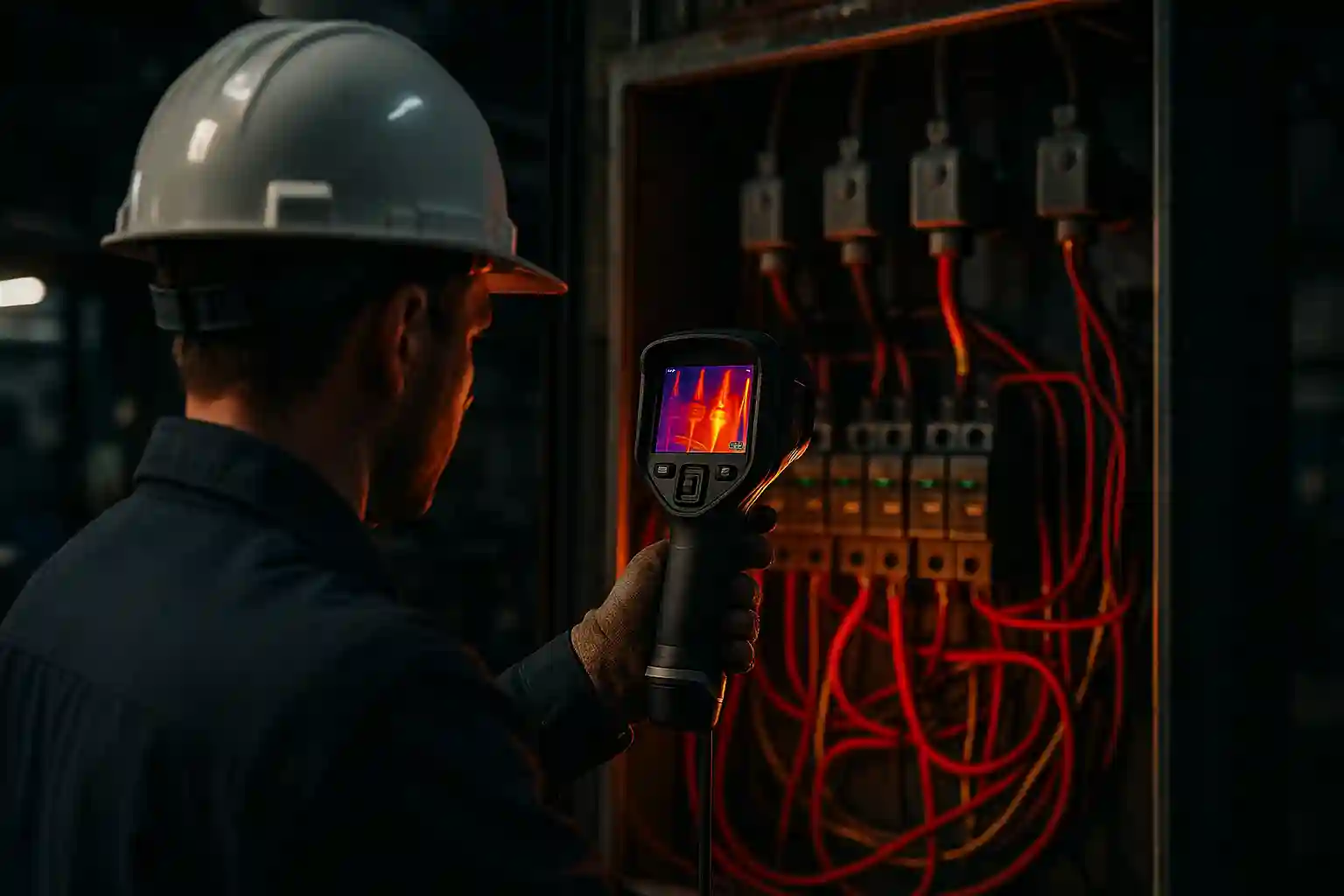
Common Types of Non-Contact Thermometers
- Handheld infrared thermometer – popular in industrial maintenance and HVAC.
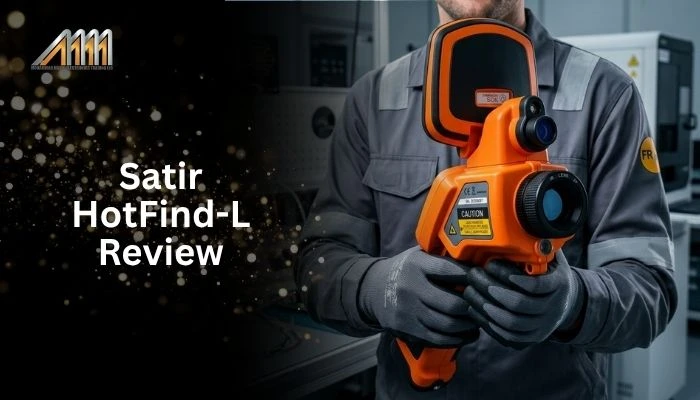
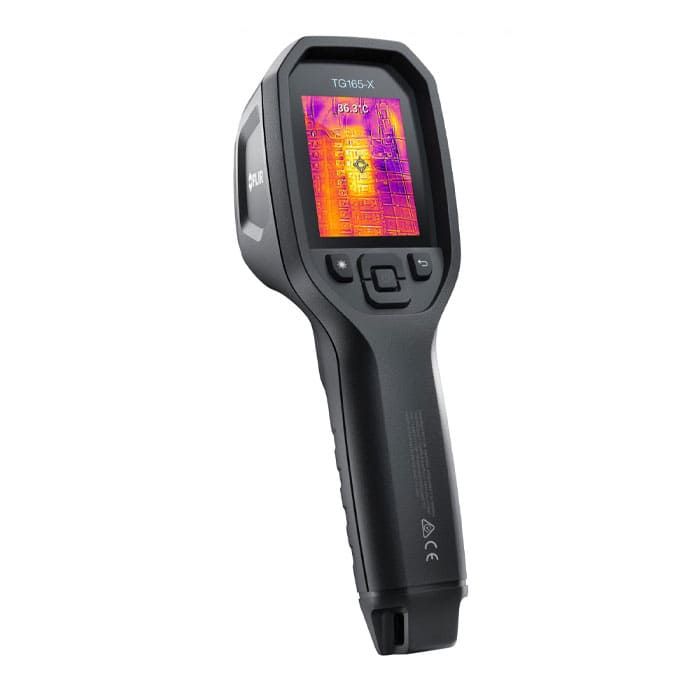
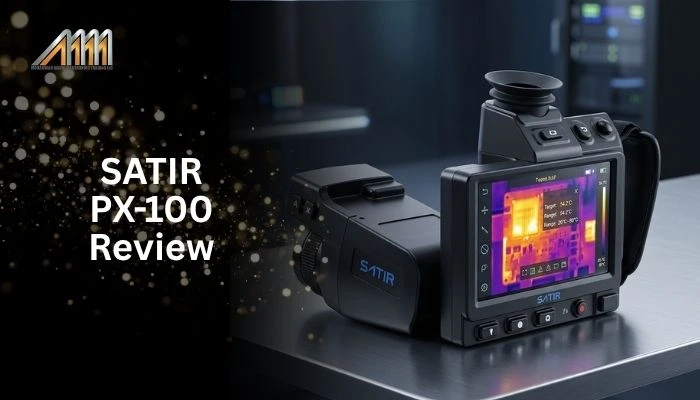
- Thermal imaging camera – advanced device for scanning hot spots and surface profiles.
- Medical IR thermometer – ear or forehead devices for quick fever detection.
Instant response time (milliseconds).
Safe for high-temperature and moving objects.
No contamination risk (no physical contact).
Suitable for predictive maintenance in rotating machinery, motors, and bearings.
Accuracy depends on emissivity and environmental conditions.
Less accurate than contact thermometers in laboratory conditions.
Higher cost, especially for thermal imaging cameras.
✅ Best use case: When safety, speed, and accessibility are priorities.
Contact vs Non-Contact: Key Differences
| Feature | Contact Thermometer | Non-Contact Thermometer (Infrared) |
|---|---|---|
| Measurement Method | Direct probe/sensor on surface/liquid | IR radiation detection without contact |
| Accuracy | Very high (±0.1°C typical RTD) | Moderate (±1–3°C, depends on emissivity) |
| Response Time | Slower (seconds) | Instant (milliseconds) |
| Safety | Risky for hot/moving surfaces | Safe for high-heat and hazardous areas |
| Cost | Cheaper (basic digital models) | More expensive (IR + thermal cameras) |
| Industrial Use | Calibration, labs, food, pharma | Predictive maintenance, furnaces, motors |
Industrial Applications of Contact vs Non-Contact Infrared Thermometers
Real-world applications are the best way to understand the value of a contact thermometer compared to a non contact infrared thermometer. In industrial settings, each type of thermometer solves a different problem. Contact thermometers are essential for precise calibration and laboratory-quality measurements, while infrared thermometers are widely used where speed, safety, and non-invasive testing are required. From steel production and HVAC systems to electrical maintenance and pharmaceutical industries, the examples below highlight how both thermometer types play a critical role in ensuring accuracy, efficiency, and safety in daily operations.
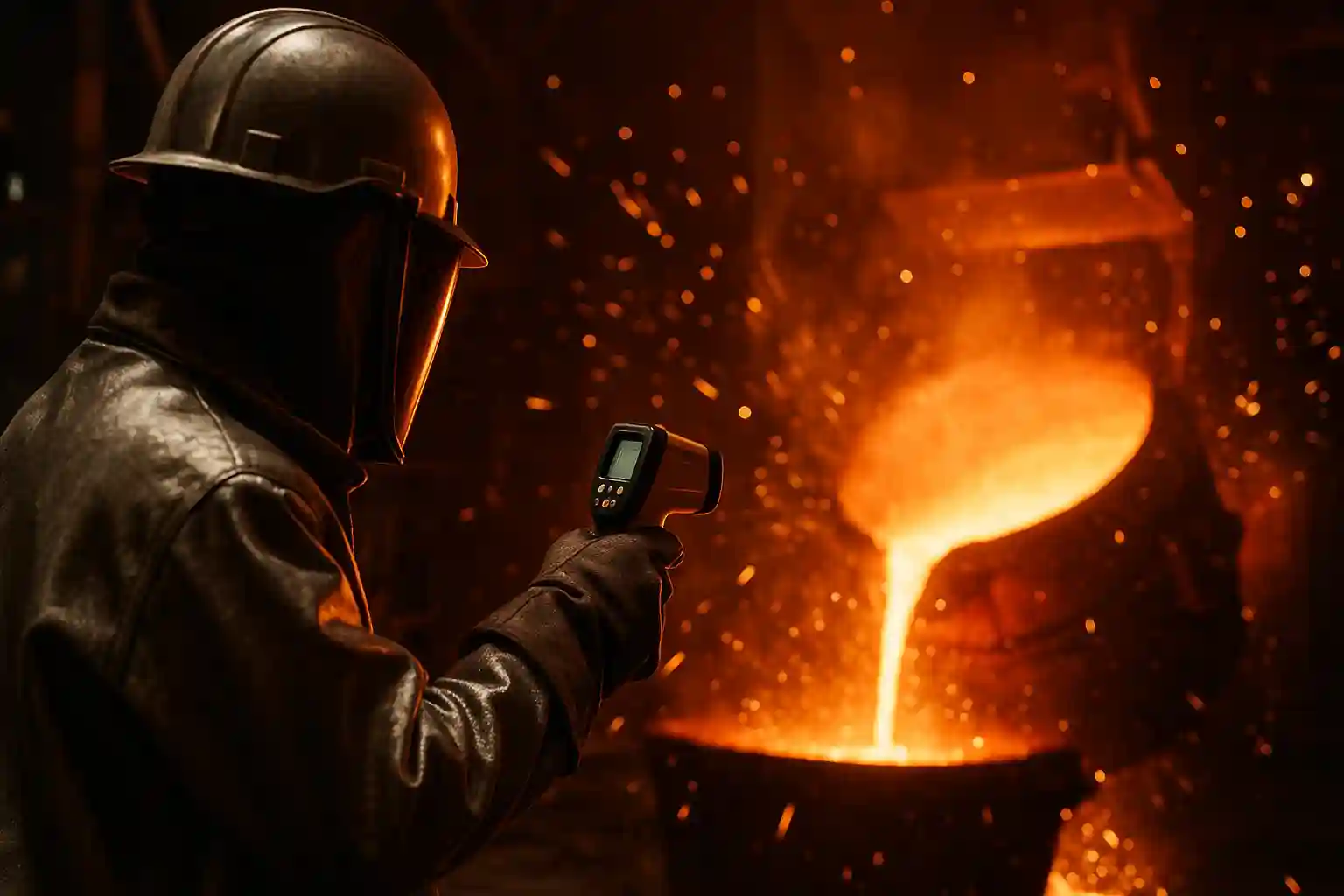
In the steel and foundry industry, temperature monitoring is a matter of safety and product quality. Contact thermometers such as thermocouples are often used for calibration in controlled environments, ensuring that process instruments remain accurate. However, placing a probe into molten metal or a furnace is impractical and dangerous. This is where a non contact infrared thermometer or even a thermal imaging camera becomes essential. These devices allow operators to measure surface temperatures of molten steel, ladles, and furnaces from a safe distance, improving both accuracy and worker protection.
Contact thermometers used for calibration of high-temperature processes.
Non-contact IR thermometers used to measure molten metal surfaces safely.
For HVAC technicians and refrigeration engineers, both thermometer types are essential. Contact thermometers (digital probes or RTDs) provide highly accurate readings of refrigerant lines, airflow temperatures, and coil efficiency. At the same time, a non contact thermometer allows quick inspections of duct leaks, air registers, and hot or cold spots without interrupting the system. In large commercial buildings across the UAE, where energy efficiency is a priority, the combination of contact vs non contact thermometers ensures both precise calibration and fast troubleshooting.
Contact probes measure precise airflow and refrigerant pipe temperatures.
IR thermometers quickly check duct leaks, hot/cold spots, and surface temperatures.
In electrical maintenance, reliability and safety are top priorities. Contact thermometers can be used in laboratory calibration of sensors inside electrical equipment, but when it comes to live switchgear, transformers, or power panels, direct contact is unsafe. Here, a non contact infrared thermometer or thermal imaging camera is the tool of choice. These devices help engineers detect hot spots, overloaded circuits, and failing components before breakdowns occur. Predictive maintenance with IR thermometers not only prevents costly downtime but also reduces the risk of fire and electrical hazards.
Contact thermometers calibrate sensors in equipment.
Infrared thermometers and thermal cameras detect hot spots in switchgear, transformers, and cables, preventing failures.
In food processing and pharmaceutical manufacturing, strict compliance with safety standards makes thermometer choice critical. Contact thermometers (digital probes, RTDs) are trusted for core temperature measurement of liquids, semi-solids, and stored goods, ensuring HACCP and GMP compliance. On the other hand, non contact infrared thermometers are widely used for quick surface checks on packaging, conveyor belts, or incoming raw materials. This non-invasive approach helps maintain hygiene and prevents contamination while still delivering reliable data. Together, contact and non contact thermometers protect product integrity and meet international quality standards.
Contact probes ensure compliance with strict regulations.
Non-contact IR thermometers help with quick quality control without contamination.

Buyer’s Guide: How to Choose the Right Thermometer in UAE
When buying an industrial thermometer in UAE or globally, consider:
Accuracy – RTD for calibration; IR for operational checks.
Response Time – IR for moving targets; contact for stable, precise measurements.
Temperature Range – ensure it matches your process (e.g., furnaces vs HVAC).
Safety – non-contact for hazardous areas.
Environment – emissivity adjustments needed for reflective metals.
Budget – digital probes are cheaper; IR and thermal cameras are premium.
Supplier – choose ISO/IEC-accredited suppliers like Testo, PCE, Marmonix in UAE.
Maintenance & Calibration Tips for Contact and Non-Contact Thermometers
Proper maintenance and calibration are essential for keeping both contact thermometers and non contact infrared thermometers accurate and reliable in industrial environments. Below are best practices every engineer should follow:
Annual Calibration (ISO/IEC 17025): Always send your industrial thermometers for annual calibration according to ISO/IEC 17025 standards. This ensures accuracy and compliance with international guidelines.
Check Emissivity Settings: For infrared thermometers, adjust emissivity when measuring shiny or reflective metals. Incorrect settings can cause significant measurement errors.
Use the Correct Distance-to-Spot (D:S) Ratio: Make sure your target surface is larger than the measurement spot defined by the IR thermometer’s D:S ratio. This is critical for reliable non contact readings.
Protect Probes and Sensors: Store contact thermometers (RTDs, thermocouples, probes) in dry, safe conditions to avoid damage and drift in readings.
Replace Batteries Regularly: Dead or weak batteries reduce response time and may cause sudden downtime. Keep spare batteries for handheld thermometers.
Cross-Check Measurements: Compare readings from a non contact infrared thermometer with a calibrated contact thermometer to verify accuracy in critical industrial processes.
Conclusion: Choosing the Right Industrial Thermometer Both contact thermometers and non-contact infrared thermometers are indispensable tools in modern industry. Contact models remain the standard for accuracy, calibration, and laboratory precision, while infrared devices excel in speed, safety, and predictive maintenance across HVAC systems, furnaces, and electrical equipment.
When comparing contact vs non-contact thermometers, remember that each type solves a different industrial challenge. Many professionals in the UAE and worldwide rely on both thermometer types: a contact probe for calibration and a non-contact infrared thermometer for fast, safe spot checks.
✅ For best results, choose a reliable industrial thermometer supplier in UAE that offers trusted brands like Fluke, Testo, PCE, and Marmonix, complete with ISO/IEC calibration certificates. By selecting the right thermometer and maintaining it properly, you ensure accurate measurements, improved safety, and reduced downtime in every application.
About jahebimme
I'm Mahboubeh Jahebi, a specialized content writer and SEO expert with over 5 years of experience in creating technical content focused on industrial equipment, precision instruments, and measurement technologies. Throughout my career, I’ve had the opportunity to work with reputable international brands and proudly contributed to the content development strategy of Mohammad Mahdi Electronics (MME)—a leading supplier of measuring tools and test instruments across the Middle East. My mission is not just to inform, but to simplify complex technical concepts and turn them into valuable, actionable insights that help readers make smarter decisions.
View all posts by jahebimme


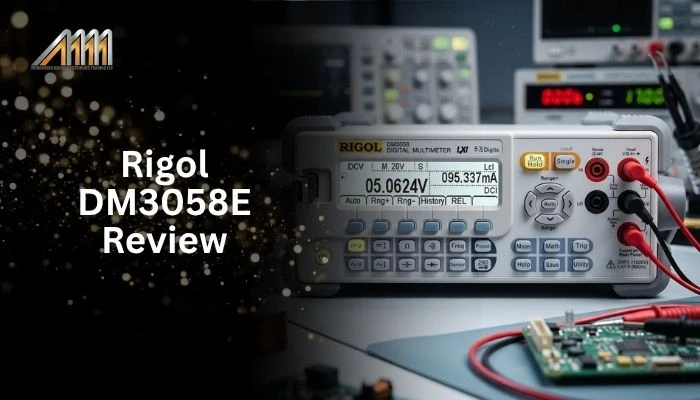
Bench Multimeters