


Quick Comparison Table: Fluke 179 vs 175 vs 177
| Feature | Fluke 175 | Fluke 177 | Fluke 179 |
|---|---|---|---|
| True RMS | ✔️ | ✔️ | ✔️ |
| Backlit Display | — | ✔️ | ✔️ |
| Temperature Measurement | — | — | ✔️ (–40 °C to +400 °C, thermocouple included) |
| Basic DC Voltage Accuracy | ±0.15% + 2 | ±0.09% + 2 | ±0.09% + 2 |
| Basic AC Voltage Accuracy | ±1.0% + 3 | ±1.0% + 3 | ±1.0% + 3 |
| Count / Resolution | 6000 | 6000 | 6000 |
| Max Voltage (V) | 1000 V AC/DC | Same | Same |
| Max Current (A) | 10 A AC/DC | Same | Same |
| Resistance | 0.1 Ω–50 MΩ | Same | Same |
| Capacitance | 1 nF–10,000 µF | Same | Same |
| Frequency | 2 Hz–100 kHz (V); ≤30 kHz (A) | Same | Same |
| Safety Ratings | CAT III 1000 V / CAT IV 600 V | Same | Same |
| Battery Life | ~200 h (alkaline, no backlight) | ~200 h | ~200 h |
| Dimensions | 43 × 90 × 185 mm | Same | Same |
| Weight | ~420 g | ~420 g | ~420 g |
| datasheet |
Fluke 175 True-RMS Digital Multimeter: Simplicity, Durability & Affordability
The Fluke 175 is the entry point into the 170 series and offers serious reliability without extra bells and whistles. It includes True RMS for accurate readings, particularly on non-linear loads, and is housed in a rugged design with high safety ratings. This model is perfect for electricians and technicians who prioritize essential features at an affordable price point.
Strengths:
- Accurate basic electrical measurements
- Extremely durable, shock-resistant housing
- Affordable without sacrificing performance
Who It’s For:
- Students in technical schools
- General electricians
- Commercial facility technicians
Limitations:
- No display backlight
- No temperature measurement support
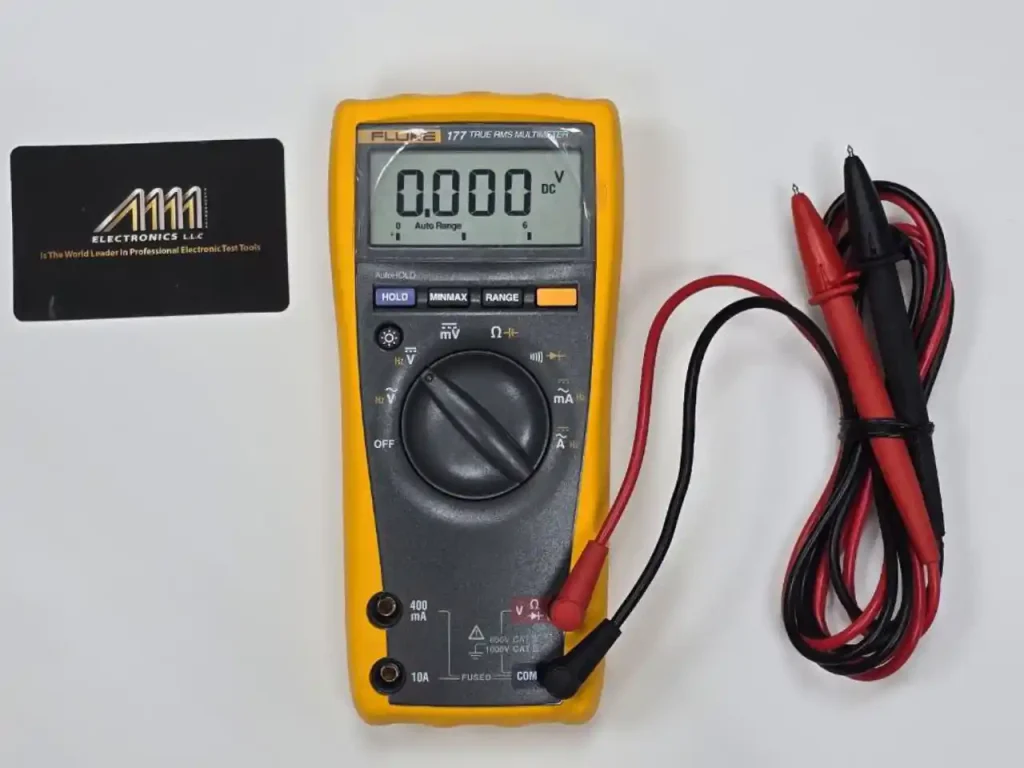
Fluke 177 True-RMS Digital Multimeter with display backlight: Enhanced Accuracy and Visual Comfort
The Fluke 177 builds on the 175 by adding a backlit display—a must-have in low-light or field environments—and increased voltage measurement accuracy. It’s a favorite among professionals who need precise readings and excellent visibility during inspections and diagnostics.
Advantages:
- High DC accuracy of ±0.09% + 2
- Bright backlit display for dark workspaces
- Maintains rugged safety and durability of the 175
Best Used For:
- Industrial automation
- Electrical maintenance in dim areas
- Field diagnostics
Trade-offs:
- Still lacks temperature capabilities
Fluke 179 TRMS Digital Multimeter : Fully Loaded for Advanced Technicians
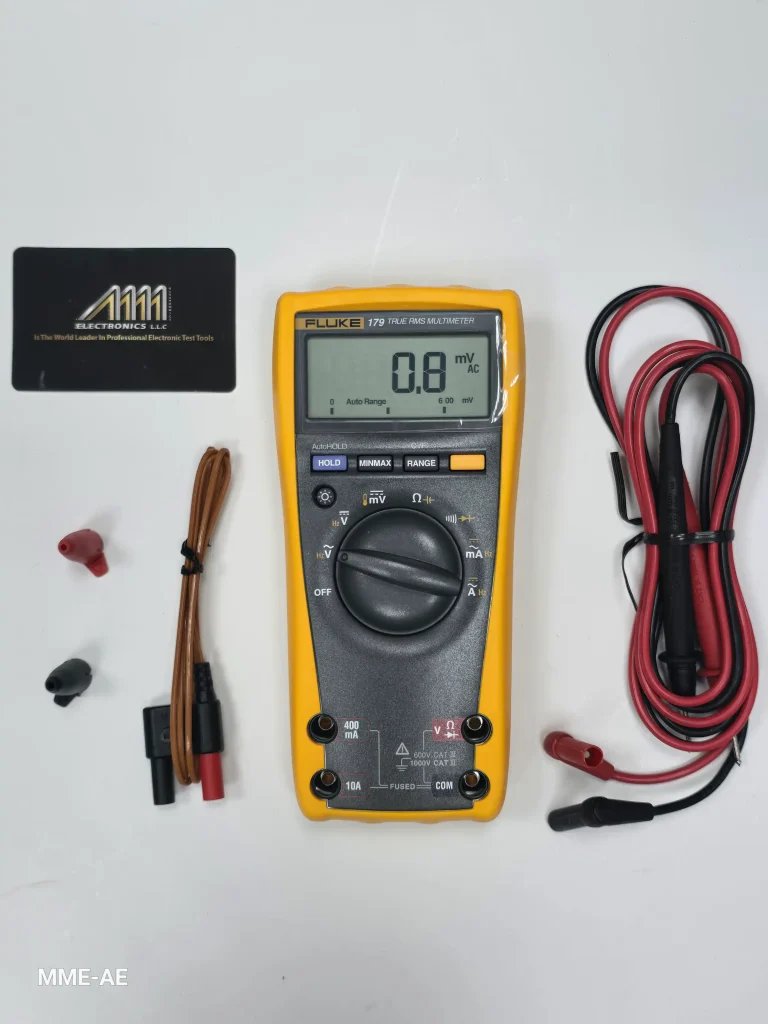
The Fluke 179 is the premium model of the trio, offering everything the 177 does, plus the ability to measure temperature with the included thermocouple. This makes it ideal for HVAC professionals, engineers, and technicians handling both electrical and thermal diagnostics.
Why It’s the Flagship:
- Built-in temperature measurement (K-type thermocouple included)
- Combines all features of the 175 and 177
- Advanced diagnostics in a single tool
Perfect For:
- HVAC/R professionals
- Process automation engineers
- R&D labs
Minor Drawbacks:
- Higher price point (but well worth the functionality)
The Differences: Fluke 179 vs 175

The key difference between the Fluke 179 and Fluke 175 lies in advanced functionality. While both offer True RMS, robust build quality, and high safety ratings (CAT III 1000V / CAT IV 600V), the Fluke 179 includes a built-in temperature measurement feature with a K-type thermocouple, making it ideal for HVAC and multi-discipline tasks. Additionally, the 179 features a backlit display, offering better visibility in dim environments, while the 175 lacks both of these. If you need temperature diagnostics and better screen readability, the Fluke 179 is the superior choice.
The Differences: Fluke 179 vs 177

The main difference between the Fluke 179 and Fluke 177 is the addition of temperature measurement in the 179 model. Both multimeters share identical core specifications: True RMS, 6000-count resolution, backlit displays, and high accuracy (±0.09% for DC voltage). However, the Fluke 179 includes a built-in thermometer with a K-type thermocouple, enabling users to measure temperatures from –40 °C to +400 °C—an essential feature for HVAC technicians and industrial maintenance engineers. If you don’t need temperature functionality, the Fluke 177 offers the same precision and display quality at a slightly lower cost.
The Differences: Fluke 175 vs 177

The main difference between the Fluke 175 and Fluke 177 is the improved accuracy and the presence of a backlit display in the 177. Both models feature True RMS, CAT III 1000V / CAT IV 600V safety ratings, and a rugged design, but the Fluke 177 offers better DC voltage accuracy (±0.09% vs. ±0.15% in the 175) and includes a backlight, making it easier to read in low-light conditions. If your work involves precision and visibility in darker environments, the Fluke 177 is the smarter choice.
Conclusion: Which Fluke is Right for You?
If you only need essential features on a limited budget, the Fluke 175 is a sensible choice. If you often work in dark environments or require greater measurement accuracy, the Fluke 177 is a smart upgrade. However, if you’re looking for the most complete performance in this series and need temperature measurement as well, the Fluke 179 is the best and most professional option.






د.إ0.00 (excl.VAT)
(5 reviews)

د.إ0.00 (excl.VAT)
(4 reviews)





 Bench Multimeters